There is such a strong connection between breath and good sex. I’ve written about it before in previous blogs and if you are a client or want to be a client, you’ll know that we work a lot on deep breathing and meditation.
“The key to really good sex is not technique: it’s breath movement and sound”.
Anyone who practices yoga or meditation will know about deep, rhythmic breathing. And breath is a fundamental foundational exercise in the practices of tantra and orgasmic meditation. It’s an easy way to bring mindfulness, awareness, and connection to oneself and a partner. Here is a GIF demonstrating a basic deep breathing technique. Try it and follow along:
I know what you might be thinking? Good sex is so much more COMPLICATED than the breath- that breath and good sex might be connected but it isn’t that strong of a relationship. I’ll challenge y0ur thinking on that by offering you a couple exercises to try with your partner next time you express yourself sexually.
Deep Breathing Exercise (Solo or within a Relationship)
Sit or lay comfortably, either alone prior to a solo sexual session or prior to a partner(s) session. Do deep, rhythmic breathing, or what this video calls “belly breathing”. We suggest for 3-5 minutes and if you have a difficult time with it, do a guided breathing exercise (easily found on podcast app or this other video below.
Tantric Breathing: Breathing in Unison
Sit across from your partner comfortably so you can look into your partners eyes, some partners like to sit crossed legged, knee to knee, and some need more support from pillows and chairs. Be comfortable- you will do this exercise for five minutes so I suggest you setting a timer. Sit across from your partner and gaze into their eyes. For five minutes, I want you to match each others breath while gazing into each others eyes. Generally, one person will need to breath deeper than the others, because our lung capacity is different. Try to breath deep together, increasing air flow and connectivity. For more information, see my blog on Tantra Sexuality: Weaving Spirit and Sex
Tantric Breathing: Alternating Breath
Like the exercise above, but alternate breath: when one of you inhales, the other exhales. Do this for five minutes.
If you’d like to learn more about how to have Good Sex, listen to my podcast love.sex.ATX and the episodes dedicated to Good Sex at (love.sex.atx).
Each week, Rhiannon will take you on 2-3 minute carnival ride around a particular fetish. She provides follow up information on her Facebook Page for people seeking more information (@RhiannonBeauregardCST)
Here is the first video of #FetishFridays, published on 10/20/17. This segment is weekly so subscribe to keep up-to-date with all content published and follow her on Facebook to continue the conversation going!
The goal of #fetishfridays is to educate and inspire the viewers to be curious and non-judgmental about other peoples fetishes and desires as well as their own. I hope to encourage folks who may have stayed closeted with their fantasies to step out of their comfort zone and explore an aspect of their sexuality, whether known or unknown, that would bring them a lot of pleasure.
It is also the hope of the weekly #fetishfridays installment that people who are in need of therapy and education about their fetish will reach out to qualified professional to help them legally, ethically, morally, and sexually express themselves in a healthy way. If you are located in Maine, Massachusetts, New Hampshire, New York, or Texas, I could be that person. Feel free to contact me using the form below or by emailing Rhiannon[at]SexTherapy-Online.com or calling me at 512.765.4741.
One of my favorite areas to counsel people is in the area of dating. It is such a meaningful and exciting time for people, yet very rarely do I think people go into dating with thought, knowledge, and intention. Dating is one of the MOST important processes in our lives, no matter what the outcome, and yet many people seem to go into dating willy nilly as if it is supposed to just be something we KNOW how to do and as if it NEVER changes over time (and we all know how it DOES change over time).
I always advise my clients to go into dating intentionally and prepared to encounter a variety of issues that will come up before and during the dating process. And it is important to note, that dating IS a process. It isn’t a destination but rather a journey.
In this first blog, I’m going to talk about the tasks that I advise my clients to do PRIOR to beginning dating (it will be helpful for anyone in the dating process too, but this is what I might discuss with someone who hasn’t yet dated and is thinking about dating).
Do Your Research
It’s a big ocean out there, and there truly ARE plenty of fish in the sea. I’m pretty sure none of us would go deep sea diving without the proper training, equipment, experience etc. While dating is much less dangerous than deep sea diving (most likely you won’t DIE dating) I’d argue that it is way more complicated. So why would we venture off into the deep sea of dating without knowledge, training, education, and all the other stuff we need to know in order to figure out how to be successful in dating????
So in this step (the pre-dating step- as mentioned above, even if you are already in a dating relationship, these recommendations are still good to follow because they will only HELP you and your relationships), I encourage my clients to do the house cleaning they need to do as well as fill-in-the-blanks that they are missing with the training and education they lack in order to come to the table as complete as they can be.
So a few suggestions:
If you have been meaning to take care of something for a while: manage a bad habit/addiction, accept your body, get your health in check, sell an old car, invest to therapy, sell a property, divorce/break up with someone, improve a sexual issue you have etc. etc., do that BEFORE you start dating. You want to be the best version of yourself when you are out and about dating, not a work in progress, because you will be more likely to attract a work in progress if you ARE a work in progress.
If you are angry, hold resentments, and/or have some old emotional baggage around exes, your parents, a middle school teacher who was an asshole, or have trauma that you haven’t processed, invest in therapy and work that out, or at least get started. Dating and being in a relationship requires you to be present and available, and if you are tied up into past haunts and hurts, you might not be able to be there for your partner. Don’t know a good therapist or don’t have one in your area? That’s where I come in (if you are looking for a dating coach and relationship therapist in Maine, Massachusetts, New Hampshire, New York, and Texas). Feel free to contact me at the information below.
Educate yourself. The best way I can tell you to do that is go to a relationship therapist or dating coach AND read the following books (just think, if your car wasn’t getting you where you wanted to go, you wouldn’t just read a book and it would magically be fixed- you need a professional mechanic to help you fix it so you can get where you want to go!). The science of dating, partner selection, attachment, and everything in the world of relationships has changed over the years. Here’s what I recommend for reading:
Start with Modern Romance by Aziz Ansari and Eric Klinenberg
A comedian and sociologist team up to talk about dating, why it sucks and why it rocks, and the historical and scientific perspective on dating, relationships, and romance. My suggestion is to get the audio book, cause Aziz (Parks and Recreation, Master of None) reads it himself and he is FUNNY. Most of these books are available in Audiobook, so don’t worry non-readers.
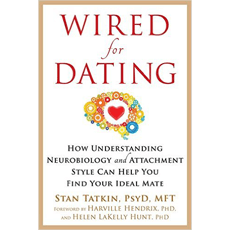
Next in my pre-dating/dating reading list is Wired for Dating by Stan Tatkin
Dr. Tatkin is a marriage and family therapist who uses the science of attachment to construct a pretty digestible theory on partner selection and modern dating. For example, he talks about introducing your dates to your friends and family EARLY, so if there are any concerns or red flags that you can catch them well before you get attached to the person (the popular romance competition/strategy shows like the Bachelor and the Bachelorette make this mistake, which makes for great TV, because the last episode is usually when the contestant brings his/her choices home to the parents. WAY TOO LATE, according to Tatkin’s work, because the attachment is already there).
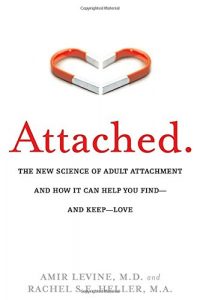
Some of my clients LOVE Wired for Dating. For those that don’t, I recommend Attached by Amir Levine and Rachel Heller
This book is GREAT on the science of adult attachment- why we attach and don’t attach to people, and how we can attach better and more productive to partners with different attachment styles. Usually my clients either like Wired for Dating OR Attached (the science minded like Attached, the relationship minded like Wired).If you are motivated, read both 🙂
My next recommendation comes with a word of caution. The author of this book IS religious (Christian), misogynistic, and pretty heterosexist. BUT, the work is so good I have to overlook these sometime major flaws, especially since his ideas and his theory is so simple, even the most emotionally shut off people really, really, really do connect with his five simple love languages. The book I like for people dating is Five Love Languages: Singles Edition by Gary Chapman although he has several other versions
He also writes a mens version, but any version will do- the premise is the same and is SO helpful to so many people, and especially I find that men really get what he writes about. It’s simple, easy to understand, and can really teach you a lot about ALL your relationships (kids, friends, pets, neighbors, co-workers, etc.).
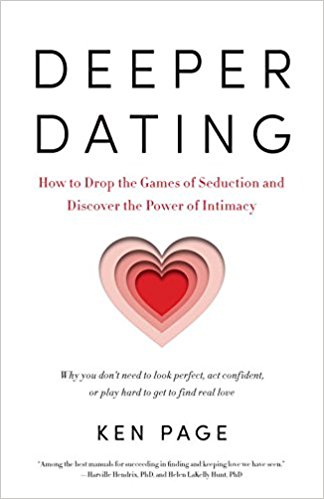
Next on my list is taking dating to a deeper level with, Deeper Dating by Ken Page.
I love how this book suggests you read it and do the exercises with a learning buddy. Like many of these books- they are person growth programs because ultimately, dating is about personal growth. Learning about yourself is the number one outcome of dating, despite us thinking the opposite. And trust me, no one has to or should do it alone- friends, dating coaches, matchmakers, therapists, family- you need help. So make sure you ask for it.
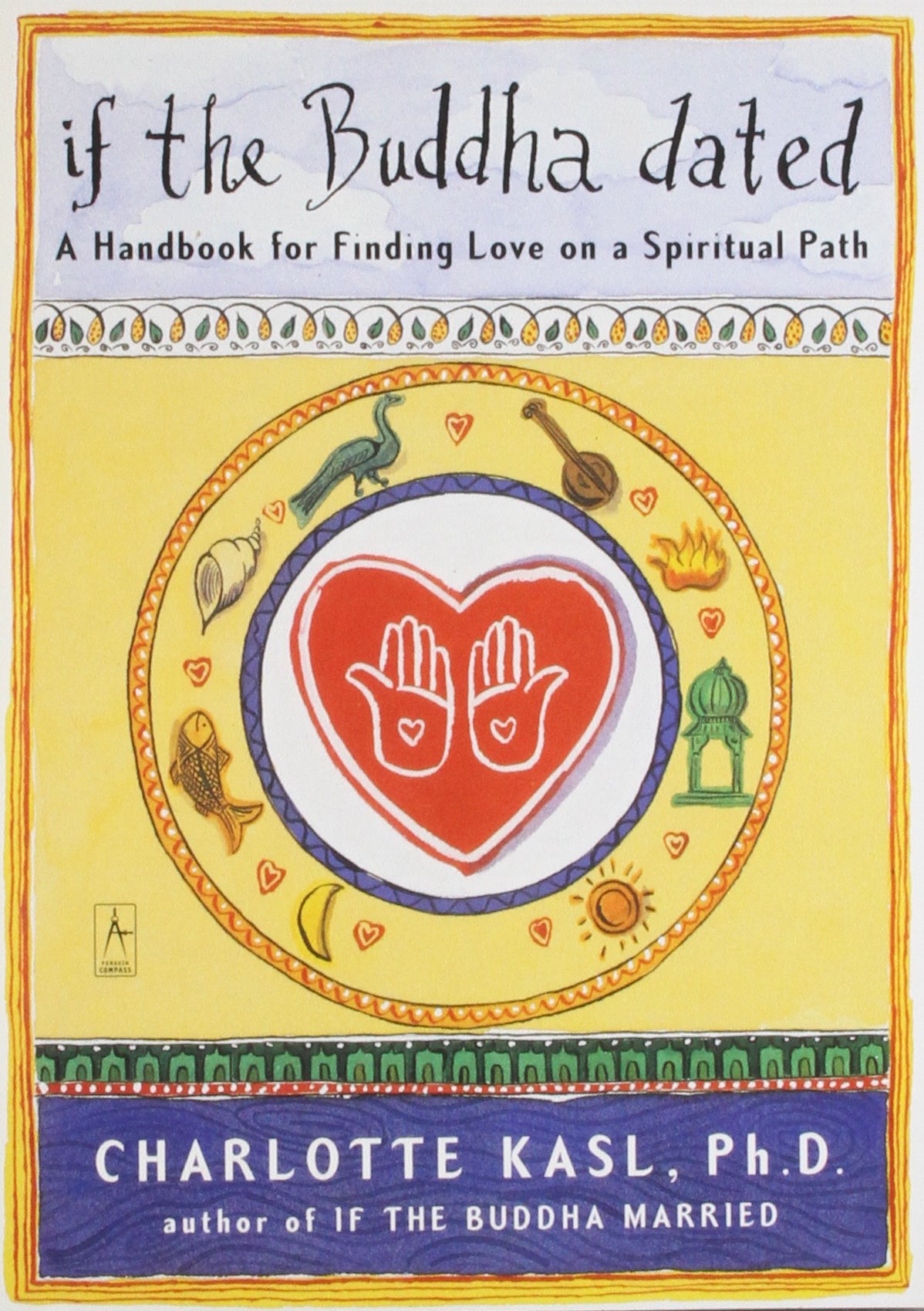
Referencing above with Chapman’s work, I didn’t mean to imply that spirituality in dating wasn’t important in my above recommendations, in fact, it is one of THE most important things in relationships and dating. Having a strong SPIRITUAL (not necessarily religious) connection to a power greater than oneself is an essential component of deeply pleasure sensuality and sexuality (see my blog on Spirituality and Sexuality and Tantra Sexuality). I like this book if the Buddha dated: A Handbook for Finding Love on a Spiritual Path by Charlotte Kasl.
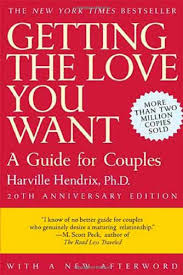
So once you complete those, if you want more information on partner selection and relationships, I like the (now classic) Getting the Love You Want by Harville Hendrix
Hendrix and his wife write this book on their popular Imago Therapy theory and have helped millions of couples communicate and connect. Even if you aren’t in a couple, this book is great at figuring out who to pick, how to communicate, and making it work.
My suggestion is treat these books like a self-study. Do the exercises, keep a journal, analyze and think, write and read, discuss it with a therapist, coach, group, and friend. A lot of these exercises I recommend to my clients without them ever picking up a book, so you’d be surprised how much you can accomplish just from what we call in the biz bibliotherapy. You get out of it what you put into it.
Okay, now that you are armed with all the knowledge in the world, you’ll be a total expert right? Not really, but at least you’ll feel like, on some level, you know what is up!
What is your GOAL of dating?
The first thing I ask my clients is “What do you want out of dating?” There are a lot reasons why people date and it is important to know why you are dating so you can target what you are looking for. Popular reasons people date are as follows:
To meet people and/or make friends
To practice dating
To have fun
To hook up/be sexual/have sex
To get over an ex*
To find a partner
To get a free meal*
To occupy time
To learn about yourself
Other reasons??? (Are there other reasons people date- I’m sure, but I think these cover the most common reasons)
You’ll notice I starred two of the items. I did that because these two reasons (“To get over an ex” and “To get a free meal”) I find particularly abhorrent. I know, the “rebound” might not be the WORST thing in the world, but dating is hard, and a lot of people are dating to find a partner and I feel its important that if you are going to embark on the process of dating that you are as close to the BEST VERSION OF YOURSELF as possible. It’s a common belief that often times we attract people who are at the place emotionally that we are at (if on a scale from 1-10 you feel a 4 about yourself, you are likely to attract another 4- do you want a 4?). If you are going through a break up, this is the time to heal,
and to mend, and to grow, not a time to get caught up in a new relationship that you may not be prepared to emotionally adapt to and handle the challenges. There isn’t a set time that has to elapse before you can start dating after a break up, but you should have processed the loss of the previous relationship and feel really good about yourself by the time you get back out there and dating.
The second star was about a “free meal”. I hear and see this a lot in the dating world. And it is 9.9/10 being said by women. And it is straight up exploitative. In our culture, we often explain that “chivalry is dead”, but part of what is killing it is entitled beliefs like the fact that it is acceptable to go out on a date with someone just for the fact that you are hungry and don’t want to pay for your own food. Men, who are expected to pay, can get resentful really fast if they feel like they are being used for a free meal, and that resentment is a horrible feeling amongst everyone. Don’t get me wrong, as a woman, I love when a man pays. It reminds me of my grandfather and how he used to take me out to dinner and make a big production of paying for an expensive meal and made sure I knew I was worth it. Men paying for me is directly tied to my own self-worth (whether that is a good thing or not, I don’t know). And I don’t take that for granted. I am honored to have someone spend their time AND money on me, even if it is just a coffee. Exploiting someones’ time and money is rude and I don’t approve!
So now that you have read all the books and done all the exercises (I particularly like Tatkin’s Ideal Partner Exercise and an exercise I call Red/Yellow/Green), figured out what your goal of dating is, then you should figure out how you are going to accomplish said goal. For example, if your goal of dating is to hook up, your strategy might be different than if your goal is to meet a lifelong partner.
That’ll be Part II of the blog… so you’ll just have to stay tuned! And in the meantime, if you need help, feel free to contact me at the contact information below. You don’t have to do this alone!
Breaking up is hard to do. There are wrong ways to do it, better ways to do it, but regardless of what goes down, ending a relationship through breaking up, divorce, or other ways is a process and a transition. No matter what happens, there will be pain. Here are just some thoughts about how to break up in the best possible way.
Whether going through a break up, divorce, or ending a job or other type of relationship, I always speak of four characteristics that are essential to any of these types of conversations. Provided a person acts with all four of the following character assets, no matter what the message, it will be less painful and more productive.
My basic argument is this: no matter what you have to say and who you have to say it to, if you speak your truth with honesty, kindness, respect, and integrity, you did all that you could do to maybe share a painful message in a more productive way. Telling someone no or no thank you is hard, and likely will be painful for both on some level. NO ONE LIKES TO BREAK UP. In fact, so many people don’t like to end a relationship (with a partner, friend, lover, employer) that many would rather stay in the painful relationship than SAY NO or end it. They choose to suffer over speaking their truth and feeling that pain. To me, it isn’t worth it.
I believe that if you deliver a message with kindness, honesty, respect, and integrity, you have done all you can do to minimize the hurt caused by a painful message. So just keep repeating these in your head when you have to deliver a tough message:
Am I being kind? (to myself and others)
Am I being honest? (with myself and others)
Am I being respectful? (to myself and others)
Am I acting with integrity?
That last one might not be completely obvious since many people, when asked, don’t know how to define integrity. What is integrity? How would you define acting with integrity?
Various definitions exist out there but the one I think I liked the best went something like this: integrity is the concept of CONSISTENCY of actions, values, methods, measures, principles, expectations, and outcomes and the honesty and truthfulness of ones actions. That word consistency is essential to our next discussion about ending a relationship with a high level of integrity.
Consistency
Somewhere along the way in my career, I read somewhere that the best way to break up with someone is through continuous reinforcement. What this looks like reminds me of the early behaviorism experiments with the rats and the lever- Skinner Boxes and Operant Conditioning and schedules of reinforcement. Basically, there was a rat, in a box. He presses a lever and gets a pellet. Every time. So he learns that the lever gives the pellet. That is continuous (consistent) reinforcement. Best way to establish/extinguish a behavior- continuous reinforcement (lever-pellet or lever-no pellet).
Without getting all Bill Nye on everyone, the other schedules of reinforcement are more challenging to establish/extinguish. So how this all applies is that when you break up with someone, and you end it, and continuously reinforce that ending, it is healthier in the end, than intermittently reinforcing through break up sex, living with each other after the break up, gradually moving out of the break up with intermittent reinforcement of the relationship and the break up (we go to this wedding as a couple, even though we are broken up… confusing) etc. etc. There are a million of examples of people doing confusing things during a break up that winds up prolonging suffering. Here are some facts via youtube, our generations encyclopedia AND how-to manual. Not super relevant but it goes more into the theory.
Now I’m not suggesting a complete shut down and shut off of the other person during a break up. Break ups are really painful and that wouldn’t be treating that other person with kindness, respect, or integrity. But its important that the break up is continuously reinforced out of kindness, respect, and HONESTY for the both parties that the relationship is over.
Why Dragging it Out is More Damaging and Painful In The Long Term
Often times, break ups get dragged out for a variety of reasons: finances, living situations, mutual friends, life transitions, pets, kids, family and often because there is a sense of ambivalence or confusion about the decision to break up. I often see what we call “polarized relationships” where one wants out, and the other does not OR couples where it is Too Good to Leave, Too Bad To Stay.
The problem with ambivalent or polarized couples is that change is inevitable but strongly resisted so the suffering just increases, increases, and increases. The lack of decision only leads to longer damage and often results in a crisis (affair, blow up, accelerated break up) instead of a more kind, respectful, thoughtful break up.
And with ambivalent relationships, when one or more isn’t sure if they want to go or not, it is important that there is the option to COME BACK if both parties choose to. And by not making decisions often leaves this option NOT an option because so much damage occurs during this period the couple passes the point of no return. If you want to preserve the relationship, it is better to work with a therapist on a planned or controlled separation (Should I Stay or Should I Go: How Controlled Separation Can Save Your Marriage) or go through a course of discernment counseling (a short-term model of counseling that aims at three paths- status quo, divorce/separation, or a six month commitment to couples therapy).
Not acting and having it blow up could leave more wreckage that might not be able to be salvaged if the two (or more) of you decide to reconcile down the road. If you aren’t sure, its better to get the help to decide rather than let things stay the same.
Reasons to Break Up The decision to break up and end a relationship is a deeply personal one and shouldn’t be made lightly. I reference Dr. Stan Tatkin’s books Wired for Dating and its marriage/relationship counterpart Wired for Love a lot in my work with relationships. In Tatkin’s (2016) book Wired for Dating , he discusses 18 questions to consider when deciding if you should say goodbye. They are posted below:
Do you or this partner have one foot in and one foot out of the relationship?
Is it hard for you or this partner to feel relaxed and comfortable around each other?
Is it hard for you or this partner to feel safe and secure around the other?
Has any abuse or violence occurred in this relationship?
Do you or this partner resist having sex with the other?
Are you or this partner strongly an island or wave? [text will explain this further]
Do you find it hard to tell how this partner is feeling?
Does this partner show little or no interest in your feelings?
Do you or this partner find it hard to calm or soothe the other?
Do you or this partner ever let thirds (such as people or tasks) take precedence over the relationship? (Note: This could include cheating or betrayal, but it doesn’t have to get that far.)
If you or this partner feels hurt or injury, does the other fail to repair it right away?
Have you and this partner tried to talk over your differences, but failed?
Do you and this partner fight frequently, nastily, or without resolution? (Note: This question is not whether you fight at all).
Have you or this partner already tried on one or more occasions to break up?
Do you and this partner keep secrets from each other?
Do you have no sense of future with this partner?
Did vetting with either your or this partners family and friends yield negative results?
Would you say a couple bubble has not even begun to form for you and this partner? (179-180)
In my podcast, love.sex.atx, we recently had an episode that discussed breaking up and moving forward. We talk a lot about how breaking up is a life transition and a journey, and often times necessary for growth, learning, and development, albeit painful. Take a listen to episode 1:10 our Season Finale, and where an on-air break up actually occurs!
Going through a break up or thinking about breaking up with your partner? Reach out to me- I specialize in working with individuals as they decide to stay or go and can offer referrals for the relationship.
PCOS and Sex: Considering Sexuality and Sexual Functioning With a Diagnosis of Polycystic Ovary Syndrome
One of the MOST common endocrine and hormonal issues facing women of reproductive age (it is estimated to affect 4-12% of women) is polycystic ovary syndrome (PCOS). PCOS is a challenging, symptom-based diagnosis that can greatly impact a woman’s sexuality and sexual functioning. PCOS is also the most common cause of infertility in the United States. What we don’t often talk about after a diagnosis of PCOS is how it affects a woman and their partner’s sexuality and sexual functioning. This blog will go over a brief review of PCOS and how it affects the sexual aspects of a woman and their partner.
Prevalence and Symptoms
Despite how prevalent the disorder is (1 in 10 women) many women suffer in silence on how PCOS affects them and how it affects the way they feel about themselves sexually and how it can affect their partner sexually.
I have been living with PCOS for approximately 5 years now, but in retrospect perhaps have had some of the symptoms long before my diagnosis. PCOS is generally a symptoms-based diagnosis, meaning I was diagnosed based on several symptoms I was exhibiting as well as some imbalances in blood and hormonal levels.
The most common symptoms in women with PCOS include:
Irregular menstruation: few or no periods, intermittent bleeding, heavy periods, etc.
Hair loss from scalp or hair growth (hirsutism) on the face, chest, back, stomach, thumbs or toes
Acne and oily skin
Fertility Issues
Insulin resistance and too much insulin, causing upper body obesity and skin tags.
Depression and mood swings
Breathing problems while sleeping (linked to obesity and insulin resistance)
The general reason behind PCOS has to do with the body producing more androgens, causing a hormonal imbalance, and the body has trouble using insulin, called “insulin resistance”. Overall, the cause of PCOS is not readily understood.
You can watch more about my journey with PCOS and why I decided to freeze my eggs last year as well as my experience as a sex therapist diagnosed with Polycystic Ovary Syndrome below.
PCOS and Sex
Not only is PCOS not well known as a major issue for women of reproductive age and the #1 cause of infertility, even more closeted is how PCOS affects sex and sexuality of the woman and their partner(s). PCOS can have tremendous affects on a woman and their partner and this blog aims at creating more awareness about how PCOS affects the sexuality and sexual functioning of all people involved.
Body Image
The biggest effect I see in clients (and in myself) living with PCOS is how the symptoms of PCOS can change how we feel about our bodies. Not only did I gain weight mostly in my breasts, abdomen, and upper arms the more the PCOS progressed, but I also grew a white, fine hair on my face that became more and more embarrassing the longer into the diagnosis I went. No matter what I did, I still gained weight and the hair still grew. I have always had issues with acne since adolescence, and I noticed that I was getting increasingly more cystic acne on my cheeks, chin, and even my neck. Painful red bumps on my neck which had never happened before. There is nothing less sexy than feeling like I don’t even know what my body is doing and feeling super self-conscious on how it looks due to weight gain, hair, and acne.
Body image can greatly affect all aspects of sex and sexuality. If you don’t feel good about yourself in your own body, why would you want to share it with anyone else? Having a negative body image about ones body can also really inhibit desire- the better you feel in your own skin, the more desire you’ll have to be intimate and sexual with yourself and partners.
Partners don’t often understand this and I have seen that a partner sometimes doesn’t like the body that their partner has developed because of PCOS. Self-acceptance is the first to place to start, and then communicating with your partner WHY you might be having these feelings about your body. Partners often misinterpret a lack of desire for sex or inhibited arousal as something wrong with THEM. It’s important to talk to your partner(s) about PCOS and how it affects you and to ask for your partner to work to help you and them accept your body for what it IS, not what it isn’t.
How I Manage It:
It sucks. And its not fair. But I tried to focus on my body as something that needed my help and love and support, and not something to loathe and despise. I tried several different very restrictive diets, only to find that the Ketogenic Diet was the most successful. I lost a little a weight and felt better about my body, but I also mourned the loss of what my life and my body used to be before PCOS. I’ll talk more about how Keto has helped other aspects of PCOS later in the blog.
I also started waxing my face, which helped, but since then, I have began laser hair removal monthly for all dark, hairy areas of my body (including a brazilian!) and getting my face dermaplaned ever other month (takes care of the hair and also leaves my skin looking fantastic!) Even though my hair growth was the white, soft hair on my face and lasering doesn’t work for that kind of hair, feeling good in my body and managing other unwanted hair helped. I feel like a hairless sexy vixen, which helped my body image.
Another factor was to embrace my curves. I try to wear clothing that accentuates my body, and doesn’t make me feel self-conscious. With a bigger abdomen, certain outfits (shorts for example) just didn’t make me feel good about myself. But dresses looked bomb! I really tried to find clothing AND lingerie/undergarmets that made me embrace my Marilyn Monroe figure, something that isn’t easy to do when I have been encouraged (societally) to be as skinny as possible. I also decided that when I needed to wear a swim suit, I would wear the sexiest one piece I can find. I’m 34 and it might be time to rock the pinup look instead of the bikini look. The feedback has been incredible! I have found partners CAN eroticize a more full-figured look. I look like a W-O-M-A-N, and most of them have found that VERY sexy. And so I have I- because I mean, if I don’t think I’m sexy, how can anyone else?
I was prescribed Spironolactone to manage the acne and some of the other symptoms. Spironolactone helped right away clear my skin and clear up the hormonal acne that was increasingly getting more severe on my neck and face. What it also did, however, is cause me to spot bleed more (my doctors denied that this was a thing, but the nurses did not). So I made sure I kept the dosage as low as I could, since bleeding was a major issue for me. Overall my skin looks great.
It took a long time and losing 5 lbs. to fall back in love with my body (I gained about 15 lbs after my diagnosis). I still feel self-conscious at times but body image is something that most people struggle with indefinitely, regardless of health issues.
Depression and Mood Swings
Depression and mood swings, in and of themselves can greatly impact your sexuality and your desire, arousal, and ability to orgasm and experience sex as well as your relationship with your partner. The hormonal and insulin related nature of depression and mood swings of PCOS can make for a very unstable emotional climate within oneself and interacting with your world (i.e.: partner). If someone isn’t stable emotionally, due to the side effects of PCOS, or depressed, their sex life will be impacted, with low libido, low desire, low arousal, and difficulty experiencing pleasure and/or orgasm.
And since a lot of the depression caused by PCOS is treated with psychopharmaceuticals like SSRI’s and antidepressants which are CRAZY notorious for impacting desire and sexual functioning, its like a double whammy. Ultimately, I tell my clients to weigh the benefits vs. the costs of treating their depression: If you are depressed or have bad mood swings and those are untreated, you aren’t going to want to have sex or enjoy sex. If you are on antidepressants or mood stablizers, you could feel a lot better but your desire and ability to be aroused or experience orgasm could be inhibited. Which is better or worse? Which offers you the best quality of life? These are decisions to talk about with your doctor and your therapist.
And it is important to keep your partner(s) in the loop. It can be really confusing to a partner and can impact them as well if depression and mood swings are a part of your life. Partners can feel blamed, criticized, defensive, and can subsequently develop their own anxiety and depression over their relationship because things aren’t going well or they perceive they aren’t. Open and honest communication and psychoeducation about PCOS are really important. No one wanted this- not you, not your partner, not anyone. Supporting each other and working together is the main goal of dealing with depression and mood swings, no matter what is the cause.
How I Manage It: Since so much of my mood and emotions were influenced by sugar and my blood sugar and insulin being so imbalanced, when I got the sugar and insulin and glucose reaction under control, this improved a lot, but I’m still prone to some low level depression (its interesting after I got the diagnosis a lot of things made sense including a long standing low level depression, the acne, and probably irregular periods except I had been on hormonal birth control for so long) I manage it with diet, exercise, nutritional supplements (I work with a naturopath), and a lot of rest. I can’t overwork like a lot of people without shutting down so self-care is really important. I’ve also had some success with medicinal foods and supplements such as St. Johns Wort, 5HT-P, SAM-E, and other products, but I don’t advise taking these unless you consult a doctor since they can interact with a variety of other medications (even reducing the efficacy of birth control) so even though you don’t need a prescription for some of them, they should be only taken under the supervision of a medical professional. If you want to know more about Medicinal Foods, read my blog on Medicinal Foods For Sexual Functioning .
Another thing that a lot of people discuss is Metformin. I have been prescribed metformin many times but I still resist taking it. I am not sure why- I think I am stubborn and am trying to manage these things naturally. But metformin often greatly improves these symptoms for many (as well as various other side effects/symptoms of PCOS).
Sexual Self-Esteem
Body image issues and mood aside, living with PCOS can greatly affect ones sexual self-esteem. The unpredictability of menstrual cycles and bleeding and fertility issues can cut us at the core of what is often an already fragile sexual self image. PCOS can make us mistrust our body or feel like we know nothing about it, which can lead to a lack of awareness of ourselves, our sexuality, and what brings us pleasure. I would not be surprised if a high-level of women living with PCOS also struggle with orgasm and desire issues, as well as other sexual dysfunctions, such as painful sex. And many of the pharmaceutical treatments for the symptoms of PCOS have the unpleasant side effects of affecting our sexual functioning.
Another factor, PCOS aside, is how high WAS/IS your sexual self esteem? Sex and the way we feel about ourselves is something we should be exploring indefinitely. It isn’t a destination, our sexuality and how we feel about ourselves sexually is a JOURNEY. As a sex therapist, I am constantly learning and growing and reading and journalling and going to conferences about sex. That is my profession- but what is everyone else doing to feel good about themselves sexually? To grow sexually?
On my Facebook page, I have tons of links to great books on sex and sexuality. But two I recommend for all women include Come as You Are (Dr. Emily Nagoski)and a new one Becoming Cliterate (Dr. Laurie Mintz). But there are so many more. Our sexuality has been totally neglected for most of us. Isn’t it time we build our own sexual self-esteem through KNOWLEDGE?
Oh and a brief word about partners- how is their sexual self-esteem? What are they doing to improve themselves? Is there stuff rubbing off onto you or vice versa?
How I Manage It:
The biggest factor on this was my irregular periods/bleeding. There was a time prior to my diagnosis and finding the correct hormonal birth control to be on that I was bleeding every day. EVERY.SINGLE.DAY. This really restricted my ability to be sexual with a partner (and since I have been mostly sexually single throughout my journey with PCOS, it made it REALLY hard to be sexual with a new partner). My sexual self-confidence, even as a sex therapist, plummeted and I felt like I constantly lived in fear of spot bleeding. It made it really hard to have desire, arousal, and orgasm and made me at times want to avoid sex all together. I wound up finding a hormonal birth control that helped ease the bleeding and then had to be prescribed a stronger hormonal birth control since I was bleeding through the original after a while. I also cut back down on the spironolactone and stopped taking a few supplements that I think contributed to the bleeding. Overall, it took months to figure it out but I’m happy-ish where I am at right now.
As a note- not all birth controls are equal for those of us with PCOS and medications and supplements that we are prescribed MAY VERY WELL have side effects that are distressing as well (like antidepressants on sexual functioning). Make sure you research yourself what the potential side effects are of a medication and trust your body. You know yourself better than anyone else. You can also ask your doctor, but they don’t always have or give you the full information on side effects. With PCOS, doctors don’t always know a lot about this disorder and they don’t always know all the side effects that will affect us, so make sure you do your homework and be your own advocate.
Glucose/Insulin/Pre-Diabetes/Blood Sugar
This definitely has an impact on your sexual functioning and can range to very little impact to the same affects on your sexual functioning that diabetes has. Diabetes can greatly affect your sexual functioning, including neuropathy, low sexual sensation, desire issues, issues orgasming and a variety of other issues. I don’t have the space or time to go into the complete complexities of diabetes and sexual functioning, but it’s worth a perusal of what the internet says…
How I Manage It:
I’ve tried very diets and programs to manage this, and the only thing I really have found that helps me has been the Ketogenic Diet. Sure, keto is challenging sometimes, but overall, I feel great on it, I feel way more in control of my hunger and appetite, I’m not self-medicating with sugar and carbs (which was pretty much what was happening- my blood sugar was so unregulated I was using sugar and carbs to manage mood swings, emotions, and just generally feeling crummy), and I’ve lost a little bit of weight. I know Keto is the long game for me, and I just take it a week at a time of making good food choices and learning more about the keto diet.
I’m also considering testing my blood sugar (I already test for ketones) but since I have responded so well to the keto diet, I wonder if I can do even better if I test myself regularly for blood sugar fluctuations. That might be the next chapter in my management of PCOS.
If you are struggling with a diagnosis of PCOS or think you might have PCOS and are looking for help and guidance with dealing with the symptoms of PCOS, please contact me. I am a PCOS-knowledegable and PCOS-aware therapist who can help you cope with PCOS and live the best life possible!
Online support forums and weekly recipes designed to naturally manage symptoms of PCOS.
There are also a TON of Facebook PCOS groups that can be helpful. Just type PCOS into your search bar on Facebook and let the joining of the groups begin!
Jealousy can be so painful and fiery and dealing with jealousy can be even harder than experiencing it. And jealousy is SO prevalent. At the recent 50th Annual 2017 American Association for Sexuality Educators, Counselors, and Therapists (AASECT) in Las Vegas, NV, there was a presentation entitled “Coping with Jealousy: Tools for Individuals and Relationships” presented by Erica Marchand, PhD and it was SO popular it had to be held in the main ballroom and had nearly 500 people attend. And it was just a break out session! There seemed to be more people than the keynote and plenary sessions!
Why was this presentation so popular? Because jealousy is one of the most intense and powerful and common emotions in intimate relationships. And we’ve all felt it, and we are all afraid of it.
Most of this information was reference from the presentation by Dr. Erica Marchand and is credited to her presentation.
Jealousy is an emotional state aroused by a perceived thereat to a valued relationship or position, involving feelings of hurt, anger, anxiety and/or betrayal, which often motivates behavior aimed at countering the threat. Jealousy is different from envy, where jealousy is a fear of losing what you have, while envy is desiring what someone else has.
Theories of Jealousy
There are a variety of theories psychologically on why jealousy occurs and why it occurs is important because it informs us as clinicians on how to treat it. In the therapy room at SexTherapy- Online, we approach jealousy from an integrated model of all these perspectives.
From a psychodynamic and attachment perspective, jealousy is caused by painful childhood experiences, such as loss of love, loss of parent, or threat thereof and poor attachment with primary caregivers.
From a systems perspective, jealousy arises from relationship dynamics and serves a purpose in the relationship.
From a cognitive-behavioral perspective, jealousy is a learned response that can be unlearned and people can be retrained. From a social perspective, jealousy is shaped and defined by culture and social norms.
From an evolutionary perspective, jealousy functions to guard against losing mate and/or associated resources.
Gender Differences
Men experience more jealousy in response to sexual aspects of infidelity, while women experience more jealousy about emotional aspects of infidelity. Sometimes this is credited to evolutionary psychological factors, but its a little more complicated than that. When working with clients, Marchand says that the evolutionary explanation washes over a lot of other relevant information and factors. Sexual and emotional infidelity are overlapping concepts and research on gender differences and infidelity has not been replicated consistently. Jealousy and infidelity overlap a lot, but in this blog, we are really just talking about jealousy, and not aspects of infidelity.
Jealousy has been been reported at higher levers among people who have experienced infidelity, people who have been unfaithful, and person(s) with less power/status in the relationship.
Same Sex Relationships In same sex relationships, Marchand says there is not a lot of research out there but a few items to note: gay men in monogamous relationships experience more jealousy than in non-monogamous relationships and that intimate partner violence in same sex couples is more prevalent if jealousy is present.
Consequences of Jealousy
There are significant outcomes and consequences of jealousy. In individuals, when one or both partners are jealous, individuals experience lower self-esteem, anxiety, anger, betrayal, and hurt. Attempting to address jealousy often threatens the relationship and the person can be prone to seeking reassurance, provoking conflict, exerting control, and investing more time and energy into the relationship in efforts to increase their value in the relationship.
If that doesn’t sound EXHAUSTING, I don’t know what does!
In relationships, jealousy can often lead to hostile, aggressive or abusive behavior. Jealousy can also mask as a perception of love, caring, and investment in the relationship (this is the argument that if one didn’t love someone, they wouldn’t be jealous). When jealousy occurs, the partner’s reassurance as a response to jealousy is associated with greater relationship stability (I don’t see this happening ALL that often, but it does occur!)
So if you are struggling with jealousy, and need help getting out of its clutches, I can help. Feel free to contact me at the form below or check out the Schedule An Appointment page for more information.
But here are some of the things we would be working on. If jealousy is bothering you as an individual, we would focus on the following:
Accepting /tolerating distress
Increase self-esteem and perception of value
Increase self-awareness about beliefs and experiences that are contributing to jealousy
Increase ability to self-soothe
Create response flexibility
I also see couples, poly-relationships, and Non-Monogamous relationships which can particularly prone to jealousy. If you came to therapy for your relationship(s) and coping with jealousy, we’d be working on:
Developing a critical awareness of relationship patterns
Changing relationship dynamics
Improving and Adjusting Communication
Reconciliation and healing
Some questions you can get started with for homework on helping you better understand your jealousy:
For the Individual
How do you respond to jealousy?
What are your feelings, thoughts, beliefs?
What did you learn from past experiences?
– About other people and relationships?
– About acceptable or desirable responses to jealous feelings?
What do you fear losing
What do you gut-level want to do? What do you frontal lobe level want to do?
How can you treat yourself like a valuable person?
Make a list of qualities that make you valuable.
List five affirmations a day of your value and worth.
Make a list of ways to be kind/nice/awesome to yourself
Imagine if…
What do you need to do to take care of yourself?
For the Relationship Communication
– Create space for talking about jealousy
– Take responsibility for own feelings/validate others feelings
Make an inventory of partners relationship experiences and expectations
List how to build trust/express affection/reassurance
– Things your partner can do or say to reassure you when you feel afraid, anxious, jealous (do it for self and other person)
If there is infidelity, you will want to focus on rebuilding relationship security, ethos, self-esteem
– Create space to talk about emotions related to affair- including jealousy
– Complete above lists
– Set new boundaries/agreements
– Hurt partner rebuilding
– Atone/Atune/Attach
[The majority of this blogs content was taken from “Coping with Jealousy: Tools for Individuals and Relationships” presented by Erica Marchand, PhD at the 50th Annual 2017 AASECT Conference in Las Vegas, NV]
Still need help with dealing with jealousy, give me a call. You don’ have to suffer alone!
The relationship between kink and domestic violence can get really, really, really fuzzy depending on who you ask. You don’t have to throw the stone very far to find folks who misunderstand the kink community and might quickly make a judgment that a BDSM relationship is abusive and violent. You also don’t have to look very far to find someone in the kink community that has had a previous kink relationship that they would define as “abusive” or “violent”.
So this topic can be VERY confusing and very MISUNDERSTOOD. I would caution everyone to be careful in making a judgment based on your own views of what you THINK you might believe, at the same time provide someone you have concern about with a respectful view of the facts and what you are noticing.
Based on a recent training at SAFE Austin (www.SAFEaustin.org) on “Discerning Domestic Violence” for therapists and mental health professionals, I’m going to apply some concepts around domestic violence and how these might be similar to kink relationships and how they might be different.
Before I do that, I want to explain just a few concepts about kink that are essential to understanding how kink relationships may mimic aspects of abusive relationships or domestic violence but ARE different. I call these the Three C’s of Kink and Safety.
The number one rule of a kink relationship is CONSENT. That consenting adults who agree to some terms and limits (see contracts) who continuously review consent can kind of do what they want and express themselves how they chose to. Domestic violence is inherently non-consensual, but it doesn’t always appear that way.
Another very safe concept in BDSM/Kink is COMMUNITY. The BDSM community is often a great checks and balances to its own members and the acts of its members. Education, support, training, and mentorship is available within the community.
CONTRACTS are another great way that people in the kink community ensure that their lifestyle avoids some of the vulnerabilities of domestic violence. Generally, you don’t
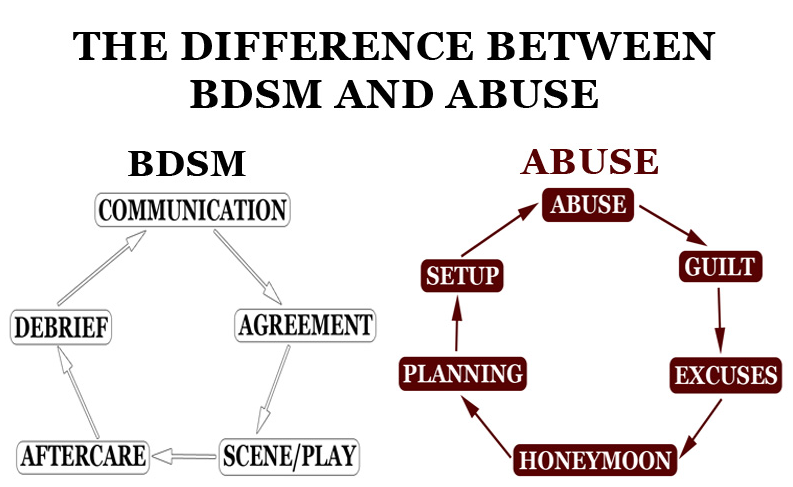
This great graphic came from CARAS (www.carasresearch.org), an organization dedicated to promoting alternative sexualities research and providing education for mental health professionals.
You’ll see in this graphic that there is a distinct difference between the cycle of abuse and the cycle of a BDSM scene or relationship, and the basis of it is CONSENT.
Domestic violence is a PATTERN OF BEHAVIOR that is used to attempt to control, manipulate, or demean an intimate partner using tactics such as physical and emotional abuse, intimidation, economic abuse, and reproductive coercion. It is obviously different from a consensual relationship between two adults that might have aspects of manipulation, control, humiliation, and demeaning behaviors and acts based on erotic play.
In domestic violence, the abusive partner may use coercion, intimidation, emotional abuse, threats, isolation, economic abuse and/or the children to control his or her partner. He or she also minimizes, denies, and blames the partner for their own behavior. The core issue for the abused is to be in control of the relationship in order to have his or her needs met. If the aforementioned tactics don’t work, then the abuser enforces their threats with physical and/or sexual violence.
In a kink relationship, the roles of the partners are pre-established and communicated as well as regularly re-evaluated. Control may be a mechanism of erotic play, but also may be fluid between both partners based on their communication and contracting agreement.
Domestic violence is a COMPLEX situation, and so is kink. If you think you might be a victim of domestic violence, regardless if you are in a kink relationship or not, get yourself to a safe place and call the National Domestic Violence Hotline at 1-800-799-7233 | 1-800-787-3224 (TTY). They also have live chat feature on their website.
If you aren’t sure if you are or not, check in with your community and let them know your concerns. A good way of checks and balances in the kink lifestyle is talking to others about what you are feeling and going through. You can also contact me at the below link to set up an appointment to discuss what you are feeling and thinking.
Looking for more information, check out this links:
Sit or lay down, with your partner or with yourself. And breathe. A deep, abdominal breath. And do it again. And just by breathing, you have the foundation of improving your sexual experience through tantra sexuality.
An area of interest of mine for some time now has been sex and spirituality, and how to gain a deeper experience of our spirituality, sensuality, and sexuality through the practice of a variety of techniques, and an area of increasing interest of mine has been tantric sexuality.
My colleagues at the Southwest Sexual Health Alliance invited Sally Valentine, PhD, LCSW to present to therapists on deepening the tantric awareness of practitioners and I want to share a little about the day.
So what is Tantra?
“Tantra is where sex is transformed into Love and Love is transformed into the Higher Self” Bhagwan Shree Rajneesh, OSHO
“Tantra is the weaving of spirit and sex. Through an awareness and consciousness of our energies we are able to shift our energy throughout our bodies, which can enhance our depth of connection with ourselves and our partner. Tantra partnering includes honest communication, eye gazing, and fully tapping into our senses by means of touching, tasting, smelling, seeing, and hearing. Practices of tantra include fully breathing, breathwork, visualization, and meditation” (Valentine Counseling, 2017)
A lot of the work I do in my practice weaves tantra naturally into couples and intimacy work, but to break it down to the average person, tantra involves four basic principles and four levels:
The four basic tantric principles that I weave into my work as an online sex therapist include:
1. Presence: Being in the moment, this moment
2. Open-Heart: Free of Judgment, unconditional Love
3. Reveres Sex: Vehicle for Higher Consciousness
4. Reveres the Body as Sacred and Divine
Tantra Practice has Four Levels
1. Body/physical: Tune into the senses/embrace the body
2. Mind/mental: Overcome old beliefs/shame
3. Heart/emotional: Let go of fear, open up to trust, giving, and receiving
4. Soul/Spiritual: Activate energy, experience of Self/Spirit
The four levels of tantric practice is exactly what we address in sex therapy at SexTherapy-Online. All these areas are attended to. I often get the question- What is Sex Therapy? What does it look like?. My answer can vary but you’ll usually hear me say something like “All my clients come to me for a sexual issue, but it is rarely ever really just about sex. It’s about life. Sex is just what brought you to me. Life is what we will work on”. These four levels are exactly what we address in therapy. We will address all of these areas.
Why Tantra?
Tantra is a change agent and can facilitate sexual healing and enhance emotional, sexual, and spiritual intimacy. Tantra promotes healthy communication, honors the self and others, and explores how attitudes and beliefs of sexuality affect sexual satisfaction. Tantra promotes change by increasing awareness in energy through meditation, eye gazing, and breath work.
“Tantra is a mode of sexual healing and sexual healing takes place when the individual experiences safety and validation for their experiences. Sexual education may enhance understanding of what had occurred. Healthy sexual communication enables one to reach into greater levels of intimacy and increase sexual self-esteem. This may be facilitated by psychotherapy, personal growth programs, and spiritual practices, such as tantra. Some tantric practices that facilitate sexual heal thing and enhancement of emotional, sexual, and spiritual intimacy are (but not limited to)” (Valentine, 2017):
– honoring self and others
– sacred space
– healthy communication
– breathing
– energy awareness
– eye gazing
– heart connection
– meditation
One of the first and most basic components of of Tantra is Tantric breathing and is fundamental to a lot of our therapeutic work. It might be annoying when someone says “Take a Deep Breath”, but there is science behind why that works.
Tantric Breathing Yogic Breath
Tantric yoga breath reduces anxiety and mental stress, strengthens cardiovascular system and stimulates the nervous system, improves oxygenation (allowing the lungs to work at full capacity, increasing the amount of oxygen in the blood), helps expel toxins from the body and improves stamina and vitality. Below you will find some instructions on the tantric yogic breath.
“Take a full breath. Breathe from your belly, concentrating on filing your lungs completely up. Place your hands over your belly and feel your belly expand on inhalation and return back to normal when you exhale. This is both mechanical (movement of their body) and visual, imagine that you are breathing all the way down to your perineum, knees, floor, etc. Start with 2 minutes increase over time.” (Valentine, 2017)
It might seem silly, but sometimes we need to start our sessions with some deep breathing to change the way our body interacts with our systems. Deep breathing provides your body what it needs.
Just as important to the practice of tantra that breath is, eye gazing is also another fundamental exercise.
Eye Gazing
Eye gazing is when you face another and look into each others eyes softly and connected and lovingly. The importance of eye gazing is that it facilitates deeper intimate connection, increases oxytocin, decreases anxiety, in some case may increase anxiety (due to vulnerability, threatened, shyness, intrusive feelings), and may illicit emotions of joy, sadness, calm, and loss. Here are some instructions below:
“Face each other and look/gaze into each other’s eyes, softly and lovingly. (Is natural in ‘new’ love but wanes over time). Poet, Rumi, calls it ‘consciousness of union’. See/feel the depth and uniqueness of your partner. Notice what feelings come up, notice what thoughts comes, notice your bodily sensations. Allow yourself to be present and just ‘be’.” (Valentine, 2017)
Sexual Energy
Sexual energy is life force energy and sexual energy is innocent. When sexual energy is open: it flows and increases vitality, creativity, healthy boundaries, passion, and sense of well being. When sexual energy is blocked or closed: one may experience rigidity in the body, pain, emotional distance, and distress. Tantra is about weaving sexual energy within oneself and others.
Sex is sacred. Sex is spiritual. Sex is being connected to oneself and others. If anything you read interests you, feel free to reach out to me via the form below or give me a call and we can set up an appointment to begin your tantric journey.
Are you thinking about getting started in the kink and BDSM lifestyle?
That’s exciting! As a certified sex therapist at SexTherapy-Online, I can help you explore this exciting world to see if it is the right fit for you and have just a few “getting started” tips as you test the waters.
Tip #1
Do some reading.
The first thing I recommend for all my clients when they are getting started in kink and BDSM is to do a little bit of reading homework (or listening- if you aren’t a reader, I recommend audio books!). The book that I most frequently recommend for those getting started in the kink and BDSM lifestyle is The Erotic Mind: Unlocking the Inner Sources of Passion and Fulfillment by Jack Morin. This is a pivotal text on exploring all things erotic and will be a great starting point to exploring who you are as an erotic person.
Tip #2
Study Basic Vocabulary
The kink and BDSM world sometimes sounds like it is speaking a completely different language. One of the easiest ways to learn about kink and BDSM is to study the basic vocabulary and terms in the kink and BDSM community. There are a variety of sites that can point you in the right direction, but here are just a few:
Tip #3
Talk to people
Do you know anyone who identifies as participating in the kink lifestyle and BDSM? If so, ask them about their experience. I have found that people who publicly identify (at least in some circles) as kink and BDSM are often very open to talking about their experiences and their lifestyle. The kink and BDSM lifestyle is generally a very accepting and open community and most people encourage community and networking. Most major US cities offer a lot of resources to the kink and BDSM community. In Austin, TX, where I have an in-office practice (although I work online with any clients located in Maine, Massachusetts, New Hampshire, New York, and Texas), there are numerous resources where you can go to educational seminars and community gatherings. In Austin, there is kind of a one stop shop website http://abdsmcommunity.info/ that lists all events, community gatherings, educational seminars, etc. you can check out. Even though kink and BDSM in some areas a bit underground, do some searching online and you can find all the information that you need.
Tip #4
Figure out Who You Are
Some people who participate in the kink and BDSM lifestyles feel like this is a part of their identity, not just something they do in the bedroom. Some people just identify as kinky in the bedroom, but vanilla in the streets. As you start this journey, keep in mind that kink and BDSM can be a lifestyle and/or a set of behaviors and everywhere and anywhere in between. Understanding your sexual identity (who you are as a sexual person) is important to understanding what you like and what you don’t like.
A good resource that I like (I don’t know how other members of the kink and BDSM community feel about this website, but I like it) is http://bdsmtest.org/ It’s limited but is interesting on the questions it encourages you to ask yourself and potentially your partner. There are others out there, just do some perusing in your research.
Tip #5
Communicate and be Flexible
If you are in a relationship or some version of something, and want to explore this, effective communication is essential. BDSM and kink isn’t something you insist upon as a deal breaker in a sexual relationship if you haven’t already established a strong foothold in the identity. BDSM and kink is not something that should be used to “save” a relationship. BDSM and kink isn’t a last resort. BDSM and kink should never be used as a way to abuse or victimize a person in a nonconsensual way. Posing it to your partner should be done gently and with a lot of communication. Not everyone gets it and not everyone identifies with the BDSM and kink lifestyle. It’s important to take your time in exploring this individually and together, and respecting the boundaries of your existing relationship.
If you or anyone you know needs help with this, feel free to contact me and talk about setting up an appointment with a certified sex therapist using the form below. This is an exciting journey, and I would be honored to help facilitate your journey.
This might be a little bit of a topical blog, but I often write about really serious stuff, and here I just want to tell you about the five sexual products I can’t live without. Let’s just have some fun and I’ll tell you why I like them.
Uberlube
I think Uberlube is one of the most superior products on the market. It is a silicone based lubricant and it is amazing. A little goes a long way and it never gets sticky like water based lubricant. It makes everything slippery and super delightful- from sexual lubrication to just rubbing it all over your body and everywhere in between. A few notes 1) silicone lubricant is not compatible with latex condoms so don’t use it if you are using a latex condom, 2) silicone lubricant can break down certain materials that various sex products/toys are made of, so make sure your material is compatible with silicone lubricant: ok- hard materials, like hard plastic, aluminum, ceramic, steel, granite, wood, marble, etc., not ok- soft materials like silicone, latex, etc.), and 3) silicone lubricants can sometimes stain certain fabrics so try out a spot and/or use with caution (or just through caution to the wind and go wild!)
Click here for more information from the manufacturer about Uberlube
Hitachi Wand
In May 2016, time.com declared the Hitachi Wand one of the “50 Most Influential Gadgets of All Time”, the
only sex related gadget on the list (read more here). This thing is the “Rolls Royce” of vibrators and kind of industry standard for external vibration. This also feels great on all parts of the body, and plugs directly into the wall, so no batteries or charging necessary. Another factor that is great about the Hitachi Wand being powered by electricity and not a battery is that there is little to no variation in vibration due to battery dying or lack of charge. This consistency is really important for having consistent and reliable pleasure, which is so important for the folks I see in my practice who have some concerns about consistency and reliability with pleasure and orgasm. This item is so awesome that it is recommended to purchase from an authorized retailer because there are “counterfeit” wands out there. Wow. So great you have to counterfeit it like a luxury handbag on Canal St. in NYC. Now that is a product I can’t live without.
Blindfold
One of my most favorite tools in the bedroom is a blindfold. This versatile little tool can be used by any
partners and can be as simple as a silk scarf or handkerchief or as sophisticated as real blindfold designed for sexual activities (I like these better, as they stay on and actually do what they are supposed to do). Why I like blindfolds? For a bunch of reasons…one of the main reasons is sensory limitation. Of our five senses (taste, smell, sight, touch, and sound), I think our visual sense is one of the MOST overused senses, especially in sex. Taking that sense away can help ascentuate the other senses. Taking away the visual sense also can often reduce anxiety in the bedroom and help to foster an environment where there can be an increased level of excitement, surrender, and intimacy. For some folks, eye contact is essential in sexual experiences, but for others, it can be distracting or intimidating. The blindfold gives the latter folks permission to focus on the feelings and their senses, instead of eye contact. Plus, blindfolds are fun.
Essential Oils and Diffuser
Speaking of senses- our olfactory sense I think is one of our most under utilized senses in sexual activity. I love a diffuser and some sensual essential oils. All pleasing oils are beneficial, but there is some research that says that certain essential oils have aphrodisiac effects. You can do a little more research on this, but in my experience, I like rose, jasmine, lavender, clary sage, cinnamon, geranium, and vanilla. And many diffusers have soothing lights on them which can create a beautiful mood and tantalize the visual senses as well. A great (and safe way) to set the mood.
High End Lingerie and Sexy Undergarmets
Some people don’t agree with me, but I love high end, classy lingerie and sexy undergarmets to encourage
feeling sexy and desire. I believe sexiness and feeling sexy is something that comes from within, and if we aren’t wearing things that make us feel sexy and desirous/desired, then how do we expect us to just turn on the sexy/desire light switch when we take off our clothes. What a delightful secret it is to be wearing sexy undergarmets, that the barrier between you and the world is maybe your ho-hum business casual attire, BUT underneath, only a sliver of fabric separates a sexual vixen from the rest of the world. Now, not all people feel sexy in lingerie and sexy undergarmets. Maybe NOT wearing undergarmets is sexier. The largest sex organ we have is our SKIN- lets tantalize our skin by wearing things that feel incredible and delicious next to our skin. And this isn’t just for women, I encourage all genders to find things to wear close to their skin that make them feel sexy and desire. But wearing things that don’t make you feel sexy…that doesn’t help sexiness and desire.
And if you want to learn more about sexual products or if you like what you read here, feel free to contact me using the form below, and keep it sexy 🙂






 Since so much of my mood and emotions were influenced by sugar and my blood sugar and insulin being so imbalanced, when I got the sugar and insulin and glucose reaction under control, this improved a lot, but I’m still prone to some low level depression (its interesting after I got the diagnosis a lot of things made sense including a long standing low level depression, the acne, and probably irregular periods except I had been on hormonal birth control for so long) I manage it with diet, exercise, nutritional supplements (I work with a naturopath), and a lot of rest. I can’t overwork like a lot of people without shutting down so self-care is really important. I’ve also had some success with medicinal foods and supplements such as St. Johns Wort, 5HT-P, SAM-E, and other products, but I don’t advise taking these unless you consult a doctor since they can interact with a variety of other medications (even reducing the efficacy of birth control) so even though you don’t need a prescription for some of them, they should be only taken under the supervision of a medical professional. If you want to know more about Medicinal Foods, read my blog on
 From an evolutionary perspective, jealousy functions to guard against losing mate and/or associated resources.
 In same sex relationships, Marchand says there is not a lot of research out there but a few items to note: gay men in monogamous relationships experience more jealousy than in non-monogamous relationships and that intimate partner violence in same sex couples is more prevalent if jealousy is present.
 In a kink relationship, the roles of the partners are pre-established and communicated as well as regularly re-evaluated. Control may be a mechanism of erotic play, but also may be fluid between both partners based on their communication and contracting agreement.

 Eye gazing is when you face another and look into each others eyes softly and connected and lovingly. The importance of eye gazing is that it facilitates deeper intimate connection, increases oxytocin, decreases anxiety, in some case may increase anxiety (due to vulnerability, threatened, shyness, intrusive feelings), and may illicit emotions of joy, sadness, calm, and loss. Here are some instructions below: