
Is it cheating or sex addiction?

Rhiannon C. Beauregard Licensed Marriage and Family Therapist & Supervisor AASECT Certified Sex Therapist & Supervisor ‪(512)-765-4579‬

Is it cheating or sex addiction?

Rhiannon No Comments

Is it cheating or sex addiction? I get this question a lot, often from spouses who have been betrayed and are trying to understand their partner’s behaviors. It’s a complex question, with an even more complex answer. The diagnosis of a sex addiction is controversial both in the field of sex therapy and mental health therapy, as well as in pop culture and mainstream opinion. There’s no doubt in my mind that sex addiction exists, and sometimes I find it interesting that people are so adamant about insisting that it does not exist. Sometimes I wonder if those who insist that it doesn’t exist have ever struggled with sex and love addiction or have ever worked with clients that have struggled with sex and love addiction. It isn’t my style to debate controversial issues on my blog or  in public forums, so I’m just going to present my views on this topic based on my experience, training, and knowledge.

Cheating
As complex as this question is, so are the two types of behaviors that we are discussing. “Cheating” can be defined in a million different ways  and is often highly individualized and based on what the individuals and the couple constructs as the boundaries of their relationships.  These boundaries can be affected by many socio-cultural factors such as culture, ethnicity, geography, religion, age, generation, time period, gender, sexual orientation, social group, and on and on.

For the purpose of this article I will just simply define cheating as having relationships, either sexual, emotional, or both, outside a committed relationship where monogamy and exclusivity is either implied or explicitly expected. This is important because often times people will insist that it wasn’t “cheating”, because they were on a break, or they were just starting to date. But if exclusivity was implied at any point during the time in question, either verbally, nonverbally, physically, or non-physically, then it likely could still be considered cheating.  Another question I always ask is “Did it feel like cheating?” Even if something falls in the gray area of cheating or not, if it feels like cheating, it likely should be treated like cheating.

Another important thing to note is that different relationships define “cheating” differently. It would be important to determine what the relationship considers cheating before assigning someone the label as a “cheater”. For example, does the relationship consider watching pornography cheating? Does the relationship consider going to an adult film store and watching a private movie cheating? Does the relationship consider going to a strip club cheating? What about sensual massages (happy endings)?  Prostitutes?
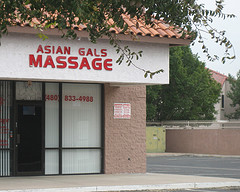
While in most relationships cheating is often defined as being sexual with other people, there’s a lot of gray area in defining what cheating is and is not.

Sex Addiction
There are many definitions of what a “sex addiction” is and generally the definitions involve some problematic sexual behaviors with an inability/unwillingness to stop despite consequences.  While people commonly use the term “sex addiction”, I usually like to allow my clients to define for themselves when we discuss the issues.  I often use “compulsive sexual behavior”, “problematic sexual behavior”, “unhealthy sexual behavior”, etc. as ways to describe behaviors that my clients present with.  Not all problematic sexual behavior falls into the definition of addiction, but the treatment is often similar.   However I’m not afraid to call a spade a spade and if it walks like a duck, looks like a duck, and quacks like a duck, then sometimes I will just tell the client it is a duck.

What I don’t encourage is having other people make that diagnosis for the client.  Often times another therapist, a spouse, a partner, family, and friends will assign the client a diagnosis in efforts to understand the behavior. A diagnosis should be a collaborative decision, between a qualified professional who has experience diagnosis and working with clients with sex and love addiction and the client and, if appropriate, the partner.  The goal of a diagnosis or label is to help the client gain awareness and understanding and eventually healing from the issues they are struggling with.  I often cringe at the word “diagnosis” as I sometimes feel that diagnosing or labeling a client is sometimes counterproductive, but many times offering a label or diagnosis can get the client started on a path to recovery through resources, meetings, groups, and other things that have an immense therapeutic value.

Diagnoses or labels should not be used for the purpose of understanding someone’s behavior, to make excuses for that person, or blame that person or something beside that persons for what is happening.   I sometimes see partners of those who had cheated or who have a sex addiction looking for a label as a way to understand their partner’s behaviors. For example, it is not uncommon for a partner to want to label their partner as a cheater rather than a sex addict because the label of a sex addict seems so much more negative or severe than a cheater. On the other hand, some partners want the diagnosis of a sex addiction because it’s easier to understand it as a disease rather than a choice.    A diagnosis and/or label of sex addiction or cheating should be one that is collaboratively made between a client and their therapist and can  involve the partner as long as it is appropriate to include the partner in this process.  A time when including the partner in the diagnosis would be contraindicated is when the partner attempts to skew the diagnosis for their own understanding or if the partner is more concerned about their needs for a certain diagnosis than for the needs of the client who is attempting to receive treatment for their behavior.  This is a fine and delicate line and should not be addressed without the consultation of a qualified professional who specializes in infidelity, affairs, cheating, and sex addiction.

Denial and Compartmentalizing
Denial and compartmentalizing are back-up dancers to the leads of sex addiction and cheating.  Without denial or compartmentalizing behaviors, neither cheating or sex addiction would be able to exist in the context of problematic sexual behavior.  Very rarely do I see cheating and sex addiction without some form of denial and compartmentalizing of behavior.  While denial is defined as not facing a fact because it is too uncomfortable to accept, compartmentalizing is an unconscious (or conscious) psychological defense mechanism used to avoid the discomfort of anxiety and discomfort caused by conflicting values, behaviors, thoughts, and actions.  Both run rampant in these situations and are often part of the first stage of treatment for sex addiction and cheating.

Is it cheating or sex addiction? No Internet resources would truly be able to point you in a  definitive answer. You should consult with a qualified sex therapist for sex addiction therapist before trying to self diagnose. I’d be happy to help you with this. Please feel free to call or email me for more information or to set up an appointment.  I can be reached at rhiannon[at]sextherapy-online.com or 603.770.5099 or 512.765-4741.  Or you can fill out the form below and I will contact you!

Is Online Sex Therapy Right for Me?

Rhiannon No Comments

Is online sex therapy right for you?  Clients are sometimes hesitant to start sex therapy online, preferring to see me in person.  But that quickly changes when they realize how many benefits there are to seeing me online.

In fact, many clients who have the option to see me in person, whether at my Austin, TX location or my Northeast locations, often elect not to because they are thrilled with the convenience that phone or online sex therapy offers them.

If you want to know if online sex therapy, online sex addiction therapy and phone sex therapy might be a good choice for you, ask yourself these questions:

1. Do I like traffic and cramming into little parking spaces?
If no, online sex therapy might save on gas and mileage and prevent wear and tear on my car.

2. Do I feel really comfortable talking to a professional about sex when they are sitting three-four feet away from me?
Phone or online sex therapy might be the right fit and you might feel more comfortable talking to someone over the phone or online if you don’t feel comfortable talking in person. Also, text therapy is always an option as well if it is really difficult for you to talk about your concerns.

3. Do I have an infinite amount of time to spend making appointments, driving to appointments, getting ready for appointments, missing work for appointments, and getting home late after an appointment?  time photo
Your time is precious and phone or online sex therapy can fit perfectly into your schedule on your lunch hour or after work while you are waiting for rush hour to calm.

4. Do I want everyone to see me walk in and out of a sex therapists office? people sitting photo
If you value your privacy, phone or online sex therapy will provide you with the privacy that high profile folks like yourself need.


5. Do I like going to a therapist in my area that has no expertise in the concerns I have with my life because I can’t find a specialist?
You deserve to have the best therapist available to you.  Online sex therapy allows you to access a qualified sex therapist no matter where you live.

Do you have more questions?  Feel free to fill out the form below and I’ll get back to you!

Things to Consider When Dating Someone With Children

Rhiannon No Comments

There are a lot of things to consider when dating someone who has children.  Your individual and relationship decisions don’t just affect you and your partner anymore, they affect you, the children, the children’s parents, grandparents, etc. and when children are involved the relationship becomes more under a microscope.  It’s important to consider the following things prior to engaging in a relationship with someone who has children or if you are in it already, it is never to late to consider the followings.

As a little note, I write this article mostly for the folks that is dating someone who has children when you don’t have children. If you’re dating someone with children and you have children, the issues to be considered may be the same or may be different, but will be a nice follow-up article.

1. Take Your Time
Take your time with everything. Take your time with getting to know the person that you’re dating, take your time with talking about their children, take your time with making the decision if you’re ready to date someone with children, take your time when meeting the children in building a that relationship with the children, and overall just TAKE YOUR TIME.  If this is truly the right relationship for you, you have a lifetime to build a strong foundation with your partners children. If you are unsure if this relationship is the right relationship for you, take your time with including the children in the relationship. It’s a lot easier to build a strong foundation with a child, then repair a rocky, cracked, and broken foundation due to past mistakes.

2. Figure Your Own Stuff Out First
Figure your own emotional stuff out first, otherwise you may project some of your own unresolved issues onto your partner’s children, the way your partner raises the children, and how you feel about it.   It’s very easy to take it personally if your partner repeats some patterns with the children that your own parents did with you.   This can be very activating and confusing and can be disguised as an issue within the relationship. But ultimately it is your responsibility to come to the relationship as whole and as healed as you possibly can. Your partners children do not need to take on your emotional baggage.

3.   Communicate
If your dating relationship progresses into a committed relationship, communicate with your partner about when you will meet the children, how frequently you will be involved with the children, and eventually what role you will take with the children as you’re dating their parent.  This includes what parenting role you may have, what disciplinarian role one might have, who is responsible for what, and the financial obligations of each partner in regards to the children.

4.  Communicate Some More
Have an open and honest talk with your partner about whether they want to have more children. If they are done making children and you haven’t even started, this can be a major source of conflict as the relationship progresses.   It’s okay if you’re unsure on whether you want children or not, but just be aware that this may be a hurdle the two of you would have to navigate in the future.

5. Communicate with Yourself
Have an open and honest talk with yourself about whether you are okay being in a parental role to children that are not biologically yours and whether you are okay with being with someone that already has children.  If you have doubts, remember, TAKE YOUR TIME.

6.   You Do NOT Live on a Deserted Island with Just You, Your Partner, and the Children
Understand that in almost all cases another parent and/or another family will be involved in your partner’s life, and potentially yours, forever. This is not for the weak or faint of heart. The best predictor of a child’s success post divorce is the relationship between their parents. And that will eventually include you.  Consider the relationship between your partner and the other parent.  Can you deal with that?

7.  For the Parent:
Avoid rushing, forcing, or pressuring a relationship between your new partner and your children. While it may be very difficult to be a single parent, don’t put a lot of parental responsibility on your new partner.   Remember, you had at least nine months to get used to the fact that you had a child;  Your partner didn’t have that. The attachment bond between your partner and your children will take time to build. Putting on a boatload of responsibility and pressure without the rewards of a relationship can lead to resentment and anger.  Don’t project your emotions onto your child when interacting with your new partner.  If your new partner hesitates with your children, avoid taking it personally.

8.  Date, Date, and More Dates
Remember, YOU ARE DATING.  Don’t lose sight of what an exciting time it is to be in a new relationship!  Go on dates, have alone time, explore each other.  Make the time, get babysitters, and develop your relationship.

9.  ENJOY YOURSELF!
Remember, kids CAN be fun and can completely enrich your life for the better.  Take the risk, you may learn something, share love, and be a positive energy in the life of a child.  What is better than that?

10.   If you are unsure about any of these things, go back to number 1 and 2: TAKE YOUR TIME and FIGURE YOUR OWN STUFF OUT FIRST.

Are you currently dating someone with children and struggling with these factors?  Do you and your partner need relationship or sexual help?  Is your sex life affected by the fact that your partner has children?  Contact Rhiannon at Rhiannon@SexTherapy-Online.com or 603.770.5099 or 512.765.4741 for more information about receiving therapy for these concerns.  Or just fill out the form below and Rhiannon will contact you directly.


Famous Sex Addicts in History

Rhiannon No Comments

There are many famous sex addicts in history that are being “unearthed” through various stories, autobiographies, books, plays, movies, and media.  And even today, a week doesn’t really go by without some sort of high profile person being caught in a compromising position with their sexual behavior (as a sex therapist, EVERYTHING can seem like a pun!).

What I want to know is WHY are sex addicts and those struggling with sexually compulsive behavior still such a taboo and underserved population?  What do the famous sex addicts in history and those with problematic compulsive sexual behavior have to teach us now in the treatment of sex addiction?  What is the implication with how their spouses handle it (there is no manual for partners of sex addicts- so what do these famous people’s lives have to teach us)?

Many of the folks that are considered pioneers in the civil rights movement STRUGGLED with compulsive sexual behavior.  Here are just a few snippets of what went on (based on what I have learned, these are by no means “verified” facts but information that has been presented in a variety of sources).

John F. Kennedy, Jr. had a SEVERE sexual addiction that was well-known and not that well covered up.  It is mostly clear that Jackie was fully aware of this.

Martin Luther King, Jr. had many sexual partners, as evidenced by the wire tapping tapes that the FBI had on him where he made many arrangements with sexual activities.  (I like this Blog Entitled “How I Choose to Respond to Dr. Martin Luther Kings Likely Sex Addiction”)

Lyndon B. Johnson was said to have a very fragile ego and used sexual activities with other women as a way to handle those emotions.

Three main power figures in the civil rights movement all struggling with a similar situation.  Many would argue it was “just the time”, but the behavior speaks otherwise.

And the list of powerful, famous people struggling with their sexual behavior goes on: Tiger Woods, Eliot Spitzer, Anthony Weiner, Bill Clinton, Michael Douglas, David Duchovny, and others.  Across the pond in the United Kingdom, the royal family and government has been riddled with sex scandals as a result of sexually compulsive behavior.  Most recent there is Brooks Newmark.  In the 1960’s, there was the massive scandal known as the “Profumo Affair” and even reaching farther back in history, Count Leo Tolstoy and James Boswell were well known for their struggles with this issue.   Each has their own story, representing thousands of stories that go untold.  And men in positions of power, high profile men, and those with access to resources are often a common typology of those who tend to act out sexually.

This article is a nice summary of “Why Men in Power Act Out” (the link is to a treatment center webpage, but please do not confuse that I am endorsing this particular center).

And not to forget the women, as actress Vivian Leigh was well known for her sexual behavior and others still emerging in my investigation.

I’d like to dig deeper and understand the historical perspective around famous sex addicts in history and compulsive sexual behavior.  I believe that people have been struggling with this for MANY years and only because those who struggle live in silence and shame do we perceive that this is not “real” or “not on my doorstep”.   But this is real and I’d like to know where the struggle has been to know more about where we are now and where we are going.  Clues to the present and future can lie in the past.

My next blog would like to dissect the partners reactions to their spouses alleged sexual addiction.  I think how the partners chooses to react is very interesting and can help construct all the ways you can handle your spouse revealing (whether voluntary or not) that they have a sex addiction.

If you or your spouse or partner or someone you know is struggling with a sex addiction or compulsive sexual behavior, there is help and hope.  For the residents of Maine, Massachusetts, New Hampshire, New York, and Texas, SexTherapy-Online provides comprehensive online therapeutic services for those struggling with sex addiction and compulsive sexual behavior and their spouses/partners.  Please contact Rhiannon C. Beauregard, MA, LMFT-S, CST at 603.770.5099 or (512) 765-4741 or email her at rhiannon[at]SexTherapy-Online.com for more information.

No Habla Espanol: Spanish Resources for Sexual Issues

Rhiannon No Comments

No Habla Espanol: It’s difficult to find resources in Spanish for anything to do with sexual issues. Recently, a colleague of mine asked if I had any Spanish resources for sexual issues as she had a client that was looking for resources to assist with some dyspareunia and vaginismus.  Off the top of my head, I didn’t know of any, but felt like it was a great question and in efforts to be culturally competent and inclusive, here is what a short search online resulted in.

(Note: While I do have some basic knowledge of Spanish [seven years and several weeks in Spain should provide that] I don’t have the language skills to review all of these resources so I cannot personally vouch for these resources entirely)
spanish photo

En La Mujer (For the Woman)

Vaginismo (Vaginismus) 
http://www.vaginismus.com/_lang/es/
http://www.womenscenteroftexas.com/resources/women.aspx?chunkiid=127548
http://www.nlm.nih.gov/medlineplus/spanish/ency/article/001487.htm
L
IBRO: VAGINISMO Y COITO DOLOROSO

Dyspareunia
http://es.familydoctor.org/familydoctor/es/diseases-conditions/dyspareunia.printerview.all.html

Dolor Pelvico (Pelvic Pain)
http://www.nichd.nih.gov/health/topics/pelvicpain/espanol/informacion/Pages/default.aspx
L
IBRO: Sana El Dolor Pelvico

Sexualidad para la mujer con cáncer (Sexuality and Cancer) 
http://www.cancer.org/espanol/servicios/tratamientosyefectossecundarios/efectossecundariosfisicos/fragmentado/sexualidad-para-la-mujer-con-cancer-cancer-sex-sexuality

Disfuncion Sexual Mujeres (Sexual Dysfunction in Women)
http://es.familydoctor.org/familydoctor/es/diseases-conditions/sexual-dysfunction-women.printerview.all.html
http://www.nlm.nih.gov/medlineplus/spanish/ency/article/001487.htm

El Sistema Reproductor Femenino (Female Reproductive System)
http://kidshealth.org/parent/en_espanol/general/female_reproductive_system_esp.html

Womenshealth.gov/espanol
http://womenshealth.gov/espanol/index.html

Disfuncion Orgasmica (Orgasmic Dysfunction) 
http://www.nlm.nih.gov/medlineplus/spanish/ency/article/001953.htm

Por Los Hombres (For the Men)

Disfuncion Erectil (Erectile Dysfunction)
http://kidney.niddk.nih.gov/Spanish/pubs/ED/index.aspx

Problemas Sexuales Comunes La Disfuncin (Hombres y Mujeres) 
http://kinseyconfidential.org/los-recursos-en-espanol/problemas-sexuales-comunes-la-disfuncin/

Adictos Sexuales Anonimos: https://saa-store.org/book/


Some additional resources that some colleagues have recommended include:

http://www.amssac.org/ (Mexico)

http://www.sexovida.com (Argentina)

Ten Reasons Why Online Sex Therapy Works (Maybe Better Than In-Person Sex Therapy?)

Rhiannon No Comments

I get asked this question all the time: from professionals, from prospective clients, from strangers on the street (well not really, but sometimes!).  And like most blogs I write, the answer isn’t simple OR short-winded!

I became interested in online therapy after I moved my practice from the metropolitan area of New York to rural New Hampshire. After I did a six month follow-up phone call to all of the clients that I had referred to other therapists in New York when I left, I realized that many of my clients didn’t pursue the referrals I had given them, didn’t connect with the therapists that I had referred them to as well as they connected to me, and weren’t continuing therapy because of it. Since this was years ago and there weren’t a lot of rules or regulations surrounding online therapy or being an online therapist, I began seeing a few clients online and over the phone.

Fast forward three years and as I shifted my focus from working with couples and families to only working as a sex therapist with individuals and couples.  I kept encountering questions and raised eyebrows about my work as an online sex therapist (I also encountered a lot of enthusiasm and support along the way as well!).  I’ve compiled these into my Ten Reasons Why Online Sex Therapy Works (Maybe Better Than In-Person Sex Therapy?).

1. Accesibility
I would often get calls from people all over the states that I was working in looking for sex therapy.  There aren’t a lot of sex therapists available and in many rural areas there aren’t even therapists available.  More and more people kept calling me looking for sex therapy in their area and I had no where to send them. And as I expanded my licensure to the states of Maine, Massachusetts, and Texas, I realized that there were more and more people that needed my services in those states.

2. Privacy
Living and working in a small rural New Hampshire town (my office was literally across the street from my condo) I found that it was very easy to get to know the community relatively quickly. I started my practice in metropolitan New York and I think one I time I ran into a client out and about. But in the town I was practicing in and the surrounding areas, it was impossible not to have that overlap. My clients at times seemed more comfortable with it than me; however, there were several times where clients or prospective clients would call and come in and realize that there was a common element and decided to not pursue therapy.  The more and more I was working in sex therapy, the more and more I was realizing that people didn’t always feel all that comfortable talking to someone that lived in their community about their sexual life.

3.  The Dreaded Waiting Area

Most therapists put a lot of energy and time into designing and decorating our waiting areas. We want the areas to be comfortable, clean, welcoming, and relaxing. Depending on your location and your facility, you may or may not be able to achieve that.  As my sex therapy practice became more and more popular, I realized that the waiting room was a source of intimidation for new clients.  Especially since the last office I had was across from a yoga studio and a ballet studio and had a common shared waiting space and my clients often would come to session during busy class times where parents were also waiting for their children in those classes or yogis were waiting for the next class. This made things very hard on my practice and my clients. It’s very difficult to maintain confidentiality in a waiting space, especially a shared waiting space. And I began to realize that many clients would prefer to not have to sit in a waiting room (or even walk through the doors to a building that housed a sex therapist) to go to sex therapy.

4. Let’s Talk About Sex
Fact: It’s not always that easy to talk about sex. Fact: It’s not always that easy to talk about sex in front of someone that you’re just meeting for the first time. I do think some of my clients find it easier to talk to me about sex over the phone or over the computer. The fact of the matter is a lot of folks don’t have good communication skills, and a lot of folks don’t have good communication skills around sex. Being able to provide online sex therapy has opened up a lot of opportunities for folks who struggle with communicating about sex. I realize that I’d rather do therapy with the whole picture from a distance than therapy with just a portion of the picture in-person. And if this sounds like an interesting and novel idea, check out my blog on Text Therapy.  Now if communication about sex is one of the clients’ issues and one of the clients’ goals, we may eventually move toward meeting in person for therapy as a therapeutic goal. For that reason I periodically see my clients in person if it’s possible a few times a year. I really try to meet all my clients in person at least once.

5. Convenience
Another fact: People are busy! Especially people with sexual issues. I find that a common element with most people with sexual issues, and I say most, is that they’re pretty busy. And oftentimes by the time they get to me there in other therapeutic programs, other meetings, other groups, and often don’t really have time for another appointment that includes travel, traffic, parking, etc. Being an online sex therapist, and doing sex therapy online, allows my clients to conveniently schedule appointments at times that work for them: their lunch hour, after the kids go to bed, in their parked car before they go home from work. Any of these arrangements have proved to be very convenient for my clients. Especially in doing online sex therapy in metropolitan New York and New York City.  Those clients can commute up to three hours ONE WAY to get into work.  Tell me when they might have time to go to sex therapy? In general my clients find online therapy easier and more convenient than in-person therapy.  Because of that factor, my clients are often more committed to the therapeutic process and are less likely to stop therapy due to inconvenience or not having time.

6. A Window Into their REAL World
It’s amazing what seeing my clients in their natural environment can tell me about their situation. It’s a luxury we don’t get when your clients come to your office. But seeing the types of distractions that the clients face in their environment can really give a therapist insight into the impact that their home life has on their sexual life. For example, if your kids or dogs are constantly interrupting your therapy session, what do you think that’s doing for your sex life? Interesting point right?

7. Meet Them Where They Are At
One of the services that SexTherapy-Online offers is the online treatment of sex addiction and sexual compulsivity.  Online therapy for sex addiction is just one modality of treatment for sex addiction. There are many other treatment options for sex addiction (see my previous blog post here for more information) such as twelve-step programs, inpatient residential treatment programs, and outpatient treatment programs that are all very effective at treating sex addiction. What makes online sex addiction therapy interesting and different than those other modalities is that online sex addiction treatment takes place in the environment that many sex addictions start in, live in, and are maintained in: the Internet. It makes sense that one would treat the problem where the problem exists. If the problem exists with inappropriate behavior on the Internet, which many sex addictions have this component, it would make sense to also treat it using the Internet. One hour a week in one’s office is not a realistic environment. One hour a week on the Internet is a lot closer to home for someone who is struggling with sexual compulsivity that involves the use of the internet.

8. Increasing Therapeutic Opportunities for All
There are many times in a therapist’s career when clients will present with unique situations that will make it challenging to provide the best treatment possible. Online therapy, and specifically online sex therapy, provides therapeutic opportunity for clients that may be underserved by our traditional therapeutic models. For example, a transgender client in the process of transitioning who is very concerned and sensitive about their transition process may feel more comfortable staying at home and doing therapy from the comfort of their own home. For example, a client with a chronic stutter who has difficulty speaking and forming ideas in the verbal domain may feel more comfortable using text therapy as a modality with their therapist. For example, a client who has significant health concerns and has trouble leaving the home due to those concerns may find online therapy a more accessible model for receiving mental and behavioral health services. For example, the client who lives in an area with inconsistent weather patterns or perhaps difficult transportation options may find online therapy are more accessible option for receiving services. For example, the high-profile politician who is struggling with a sexual issue but is too fearful of being seen going to a therapists office can access online sex therapy services from the privacy of home.  Those clients that I just mentioned may have never dreamed of having access to a therapist, let alone a sex therapist. Imagine all the people that sat in silence, suffering with sexual issues that could be helped using online therapy.

9. Environmental Impact of Distance Based Therapy
Now is the time that my inner environmentalist comes out and discusses how time, energy, and resources are all conserved when conducting therapy at a distance. Instead of maintaining two offices, I maintain one. Instead of traveling to my office or my clients traveling to my office, we all stay in existing environments, saving on time, resources, and energy.  Therapy should be something that is accessible and convenient. We can each do our parts and by putting my entire practice online I no longer have any paper documents, I do not maintain two office spaces with two sets of utility bills, and I conserve my energy usage significantly.  Having a distance-based practice is my way of contributing to cutting down on the use of resources for both my clients and myself.

10. A New Technological Model of Therapy
An important concept that is a little bit hard to grasp for a traditional, in-person therapist (and a little underdeveloped in the field) is the fact that online therapy is not just a way to deliver therapy at a distance but rather a model of therapy within and of itself. Online therapy has essentially its own unique characteristics as a model of therapy such as position of the therapist, specific interventions related to online therapy, processes of joining and building rapport, and different components of assessment and intervention.  It is a therapeutic model AND modality.  Online Sex Therapy is effective and it works!


For more information, feel free to contact Rhiannon at 603.770.5099 or rhiannon@SexTherapy-Online.com.

Practicing in Maine, Massachusetts, New Hampshire, New York, and Texas.

Medication and Sexual Dysfunction

Rhiannon No Comments

All clients that come through my practice first start with a comprehensive sexual assessment.  Within that sexual assessment, I analyze all your current medications, as many of them unknowingly have negative sexual side effects.  Even if it doesn’t say so on the literature, many medications can have a negative affect on your sexual functioning.

It is important that if you are experiencing some sexual issues, that you take a look at the medication that you are taking to see if there are sexual side effects.   Often, clients will come to their first session with a list of medications, many or all of which have some reported sexual side effect, and have no idea that they are currently taking things that can inhibit their sexual functioning.

I call it “swimming upstream” (no sexual pun intended!) when you try to resolve a sexual issue when you don’t realistically look at the health and medical issues a client might have, and this includes medication.  For some one with erectile issues or early ejaculation who is on medication that has erectile issues as a side effect, all the sex therapy in the world isn’t going to be able to overcome that medicine-induced side effect.

Common culprits are blood pressure medications and almost all of the psychopharmaceuticals that treat anxiety and depression (which is interesting because many folks have no idea that their anti-depressant could be the main reason behind their ability not to have an orgasm, get an erection, etc.).

What can you do?  Read the information provided with your prescription and do a little web searching to see what others have to say about it.  If you find that your medication has a sexual side effect, make an appointment with your doctor and see if there are alternatives to the medication with lesser or no sexual side effects.  You may have other options with other medication or other treatment options that don’t have any negative affect on your sexual functioning.

Once you are done with that, schedule an appointment with SexTherapy-Online 🙂


Looking for Sex Addiction Treatment? Try SexTherapy-Online!

Rhiannon No Comments

Finding quality treatment for sex addiction, whether you are the one who identifies as a sex addict or are the partner, spouse, or loved one of one, is a huge challenge.  This is especially true in rural areas, as there are often not readily available resources and therapists that have been trained and are qualified to treat those affected by sex addiction.

There are options, though, for those looking for treatment for sex addiction but are having a hard time finding a therapist that specializes in sex addiction in their area.  I’ll start with how to find a treatment program or therapist close to you, and end with the option of finding someone online that specializes in sex addiction.  SexTherapy-Online (www.sextherapy-online.com) is one such practice that provides quality online sex addiction therapy to clients, partners, and couples.

In-patient or Out-Patient Treatment for Sex Addiction
The first step would be to decide whether the person with the sex addiction wants/needs in-patient or out-patient treatment.  In-patient treatment for sex addiction is treatment that is usually provided at a residential treatment facility, such as a hospital, rehab facility, retreat, etc., that includes a certain length of stay (as short as three days up to 90 days is typical).  In-patient treatment for sex addiction usually requires their patients/clients to live at the facility and may or may not involve returning home on weekends or overnights.  Generally, most people travel to these facilities for sex addiction treatment.

Out-patient treatment for sex addiction can look like a variety of things.  Intensive outpatient treatment programs for sex addiction (often called IOPs) are usually programs that meet during the day, either for a half day or full day, but allow the clients/patients to return home overnight.

The above mentioned treatment options for sexual addiction are considered the most effective and the most intensive and have a good reputation of helping people treat their sex addiction.

Other out-patient treatment options for sex addiction and spouses and partners of sex addicts can look like weekly (or more) therapy with a qualified professional plus 12-step meetings and other therapies.  Out-patient treatment programs can often be tailored based on the clients access to time, resources, and responsibility.

Outpatient Treatment for Sexual Addiction for Addict and Partner
Good out-patient treatment should follow a “three-legged stool” approach (Carnes, 2015).  The first leg of the stool is the addict’s therapist and an appropriate support group and/or 12-step program.   There are several 12-step groups for sex addiction including:

Sexual Compulsive Anonymous: http://www.sca-recovery.org
Sex Addicts Anonymous: https://saa-recovery.org
Sex and Love Addicts Anonymous: http://www.slaafws.org
Sexaholics Anonymous: http://www.sa.org
Sexual Recovery Anonymous: http://www.sexualrecovery.org

The second leg of the stool is the partner’s therapist and an appropriate support group.  Services for partner’s are generally very lacking at this time in the field and most areas do not have a support services for partners; however, there are a few resources available through the following organizations:

Codependents of Sexual Addiction: http://www.cosa-recovery.org
Partners of Sex Addicts Resource Center: http://posarc.com

The final leg of the stool is for the couple to have their own therapist, who may or may not be appropriate to do family work (let’s not forget about the often overlooked victims of sex addiction: the children of sex addicts).

Finding a Therapist for Sex Addiction
Now here is the million dollar question: how do I find an QUALIFIED therapist, intensive outpatient treatment program, or inpatient program that can help someone with sex addiction and their partner, especially in areas where therapist’s might be hard to find (such as rural areas)?

Two places to begin would be the following:

The American Association for Sexuality Educators, Counselors, and Therapists (AASECT) http://www.aasect.org, is the national certifying body for sex therapists.  You can search by state and find a professional who is certified in the field of sex through a rigorous certification process.  Now not all AASECT professionals will have experience or training in sex addiction, so it is important to ask them if they have worked with and have training in sex addiction.  Another important point is that not all therapists have experience with working with each leg of the stool (especially couples) so it is important to make sure that your therapist is skilled and trained to work with couples as well (if the therapist you are seeking is for the couple).

Another place would be the International Institute of Trauma and Addiction Professionals (IITAP) http://www.iitap.com.  This Institute certifies Certified Sex Addiction Therapists (CSAT) and you can search by zip code and by state. These therapists have gone through an intensive four, week-long training module series to have them certified as a CSAT.  As mentioned above, make sure that they have experience working with  addicts, partners, and/or couples before you make your decision.

Another option, since many folks won’t live anywhere close to a Certified Sex Therapist  or a Certified Sex Addiction Therapist, would be to Google “sex addiction therapy” or “sex addiction therapist” or “sex addiction treatment facility” and your state or location.  This will likely pop up anyone close to you in your area that may work in sex addiction or any treatment centers close to you (as likely the search will be done by your location).  On the first page of your search results, you will most likely see a link to a PsychologyToday listing: Psychology Today is the leader in independent therapist listings and will take you to a page of therapists that list one of their specialities as sex addiction.  This is a good list, HOWEVER, BUYER BEWARE!  Most of the folks that list sex addiction as their specialty feel comfortable working in sex addiction but may or may not have any training in the field of sex or sex addiction.  It’s important to read their short biography on Psychology Today, then go to their website from their profile page and read their qualifications.  Psychology Today only verifies that the therapists are licensed in their states (or going to be licensed).  They do not verify that the therapist is actually trained in sex addiction treatment.  Then give them a call and check them out.

SexTherapy-Online: An ONLINE Option for Sex Addiction Treatment
So what happens if you find NO ONE in the above stated methods that is close enough to you to be practical to see them frequently (especially if you choose outpatient therapy for treatment)?  Look for “online sex addiction therapy” and your state and see what you find!

SexTherapy-Online (www.sextherapy-online.com) is an online sex therapy practice that specializes in sex therapy and treatment for sex addiction.  SexTherapy-Online can help clients, partners, and couples struggling with sex addiction from the states of Maine, Massachusetts, New Hampshire, New York, and Texas.  SexTherapy-Online provides therapy over the internet using secure video conferencing, secure online chat, or over the phone.

An important thing to note, though, is that online therapy is usually limited to the state’s that the therapist is licensed in (meaning you most likely cannot receive therapy from a person in California if you live in Maine).  The only exception to this would be if for some reason your state allowed you to receive treatment from a therapist in another state (which is a rarity- most states only allow you to be seen by therapists in the state you are living in or residing in).  You would need to consult your state’s laws before seeking out this type of distance or “tele-therapy”.

Even if the therapist does not offer online or tele-services, don’t be afraid to ask!  They might be willing to see you, especially if you don’t plan on using insurance for treatment, at a distance.  But again, be aware that this might be a modality out of the therapist’s scope so it might not be appropriate for everyone.  Also, an online model for treatment isn’t appropriate for everyone, especially folks with more severe co-existing conditions like chemical dependency, suicidal ideation, bipolar disorder, personality disorders, and a history of violence.

Making Sure Your Therapist is the Right Fit
It is important to call your therapist and speak to them before you begin therapy.  Your evaluation of the therapist begins right then and there!  According to Ardito and Rabellino (2011),  the quality of the client–therapist alliance is a reliable predictor of positive therapeutic outcome independent of the variety of psychotherapy approaches and outcome measures.  It is important that you and the therapist fit well together, so start your evaluation right then and there.

Finding an In-Patient Treatment Facility for Sex Addiction
A qualified therapist who has experience with sex addiction would be able to provide you with a referral, even if you don’t become a client, to a good treatment facility for sex addiction if you would like to go to a residential treatment facility.

Or you could try to google “sex addiction treatment facility” or “sex addiction intensive outpatient program” and see what comes up.  You could also go to a 12-step meeting and speak to some of the other recovering members to see where they did their inpatient treatment and where they would recommend.  When it comes to inpatient treatment, it is likely you would need to travel to go to one.  Intensive outpatient programs are becoming more popular these days but still can be hard to find.  The International Institute of Trauma and Addiction Professionals (http://www.iitap.com) has a list of treatment partners that have intensive outpatient programs and inpatient programs, but that list does not list quite a few of the major players.  Do your research and ask around.  There are a lot of programs that are excellent but you need to know about them.

It is important you look at the reviews of the facility and call the facility ahead of time.  Some facilities pop up and would gladly take your money, but don’t always have a good reputation or provide the services they say they offer.  It would be important to know how long the facility has been in operation for and to look at what folks are saying about it as well.

No matter what treatment option is chosen, treatment of and recovery from sex addiction for the addict and their partner and children takes a LOT of time, energy, and resources and is hard work.  There is no easy fix for addiction treatment- it took a long time to get where people are when they finally seek treatment, it takes a long time to unravel that knot.  The good news is (though): treatment DOES help!

“Text Therapy On the Rise”- Do these reports help or hurt our field?

Rhiannon No Comments

There is no such thing as bad publicity, right?  (I did a little research into that phrase and apparently it is often associated with Phineas T. Barnum, the 19th century American circus owner… interesting source… has anyone read “Water for Elephants)?

I like the 100 year old version published in the Atlanta Constitution that states”All publicity is good if it is intelligent”.”  Indeed, I agree with the latter phrase: publicity is good ONLY if it is intelligent, and to be honest, I question whether this news broadcast sounds very intelligent at all.  (No offense to Dr. Rushkin, in fact, I think her work is great and I would love to have lunch with her and discuss our mutual interests, but I have some comments on a recent broadcast on text therapy).

Boston News, Weather, Sports | FOX 25 | MyFoxBoston
 

Dr. Karen Ruskin, labeled as a “psychotherapist” but after doing a little research, I found out that she holds a PsyD AND is a Licensed Marriage and Family Therapist (so she is WELL qualified to discuss this topic- this is not an attack piece at all!), discusses how times have changed, and indeed they have! How many times a day do you pick up the phone to call someone to talk vs. how many times a day do you text someone to talk? Chances are if you have a Smartphone, you text way more than call. In fact, a 2012 Time Article (found here) states that even amongst people age 65+, texting still wins over calling (but not by much!).

I’ll paraphrase her and state while she said that it is of “therapeutic value” to text with your therapist, it is “NOT, I REPEAT, ABSOLUTELY NOT INSTEAD OF THERAPY”.  So here is where I feel like this publicity is bad publicity: this statement implies that text therapy  is considered, NOT therapy, when depending on the content of the conversation, it could, in fact, BE therapy!

I also think she does a poor job at portraying text therapy (and maybe it’s because I have watched the clip a million times, but it really does seem kind of condescending and mocking of the online distance therapy field… but I am not taking it personally).   She also speaks so authoritatively I worry that folks watching this broadcast would actually think that what she is talking about is actually WHAT text therapy IS (and as an online sex therapist that uses text therapy, her portrayal is not AT ALL how I practice text therapy).

Text therapy isn’t about reading something and having it feel “energizing”.  The text therapy I do is real therapy, just instead of TALKING we write down our conversation.  It is a slower pace, with immense therapeutic value.  How many times have you written something down, thought about it, and rewritten it to have it actually mean what you want it to mean? Imagine if you could do that in therapy?  Imagine if you had the opportunity to write, and rewrite your thoughts, feelings, impressions, opinions, etc. before presenting them to another person (like a therapist)?  Can you see how that could be useful in therapy?

In the therapeutic community, we often use written assignments and journalling as therapeutic interventions because we believe that accessing the part of the brain responsible for written language offers an additional opportunity for healing and growth so it would make sense to utilize that in a therapeutic realm as well.  (There is so much research and literature on this topic!) So if we believe that writing is a valuable form of therapeutic communication, why wouldn’t we do therapy in writing???

Dr. Ruskin also mentions the relationship between a therapist and a client, and insinuates that over text the relationship is somehow not as connected, that y0u can’t clarify misunderstandings, and you can’t see body language and facial expressions.  Now I agree with her, in text, you do “lose” (I would use a different term) body language, facial expressions, and other physical factors that you have may have in a traditional in person practice, however, you gain some things you don’t get in the verbal talk therapy realm AND to be completely honest, text therapy is closer to the real life communication that most people are having in their regular lives anyway.  Why wouldn’t we deliver therapy in text format if most of our conversations with people close to us are through text-based modes of communication (Facebook, Twitter, Texting, Email, Etc.)? It would be silly to only offer therapy in one dimension (verbal) when so much communication is going on in other dimensions!

Dr. Rushkin states “so as times have changed with regards to what we even define as a relationship” and in response I want to state that it is a natural evolution of the field that times would have changed in what we define as a therapeutic relationship.  Makes sense? (If it doesn’t, let me know as I want to make sure my thoughts and ideas are clearly being expressed in written form [see how easy it is to clear up a misunderstanding through text?])

I also feel like Dr. Rushkin and the reporter misrepresent text therapy as if it is just this when-I-feel-like-it, on-demand therapy, when in fact, that is not how I do text therapy AT ALL.  My text sessions have regular scheduled times, and operate like other traditional sessions.  I am very clear with my clients about appropriate communication boundaries and my clients respect that their therapeutic time is their therapeutic time and if they have something to say to me in between sessions they can either send me an email, call me, or schedule an additional appointment.  Done.  I am not sure what type of text therapy they are referencing, but that is not how I do my text therapy at all!

In answer to Dr. Rushkin’s belief that text therapy is better than if someone did nothing, I feel like that minimizes the value of this modality.  This isn’t one step above suffering, this is a TRUE and AUTHENTIC therapeutic modality, with its own interventions, position of the therapist, belief of problem, etc.  Once I put away my feelings about how this statement is a little offensive, I bring myself back to the point that text therapy makes therapy accessible to those who may not have had access to therapy without it.

Text therapy might not be for everyone however, just as psychoanalysis or other types of therapy aren’t for everyone either.  But text therapy for a chronic stutterer seems like a very good option.  Text therapy for someone who feels too embarrassed to talk about their sexual issues to another person but feels comfortable communicating over text also seems like a good fit.  Text therapy for someone who lives in a very rural area that has limited internet access but just enough to be able to communicate via online text- also a win.  The list goes on and on.  And text therapy for someone who just feels more comfortable texting than talking, that sounds just fine too.

Text therapy isn’t something that is going to dilute modern therapy, it’s something that can accentuate it!  We don’t have to fear it replacing “traditional” therapy, but rather it’s the new kid on the block.  We should welcome text therapy to the neighborhood!

Welcome to the SexTherapy-Online Blog

Rhiannon No Comments

The goal of SexTherapy-Online is to bring high quality and professional sex therapy to all those who need it. SexTherapy-Online aims to create universal access to online sex therapy so that no one needs to suffer sexually due to not being able to find a sex therapist in their area.

A more global goal of SexTherapy-Online is to get the conversation started about sex and to #changetheconversation about sex. SexTherapy-Online aims to help the world start talking about sex as a normal issue, rather than an issue that is complicated, shameful, off-limits, or taboo. SexTherapy-Online aims to change the conversation about sex from a negative and secretive issue to a positive, beautiful, and important part of humanity.

To meet that mission, SexTherapy-Online has begun the brave journey of blogging!  This blog will have the thoughts and opinions of Rhiannon C. Beauregard, MA, LMFT, CST (who will usually write in first person, except for this post apparently!) and will be generally focused around sex and love related issues, as well as issues facing the fields of mental health, sexual health, and online therapy.  While most posts will be written, there are a few other avenues that will help
#changetheconversation about sex:

SexTherapy-Online Twitter Account: SexTherapyOnlne (because there is no I in SEX!)

SexTherapy-Online YouTube Channel

SexTherapy-Online Email Newsletter (sent once per month, don’t worry- it won’t overwhelm you!)